
Statement on the efficient conduct of Financial Remedy Hearings Proceedings in the Financial Remedies Court below High Court Judge level
Related
AB v CD [2025] EWFC 253 (B)
DJ Dodsworth’s short judgment gives a blueprint of how not to prepare a case for trial, and how not to make a relief from sanctions application.
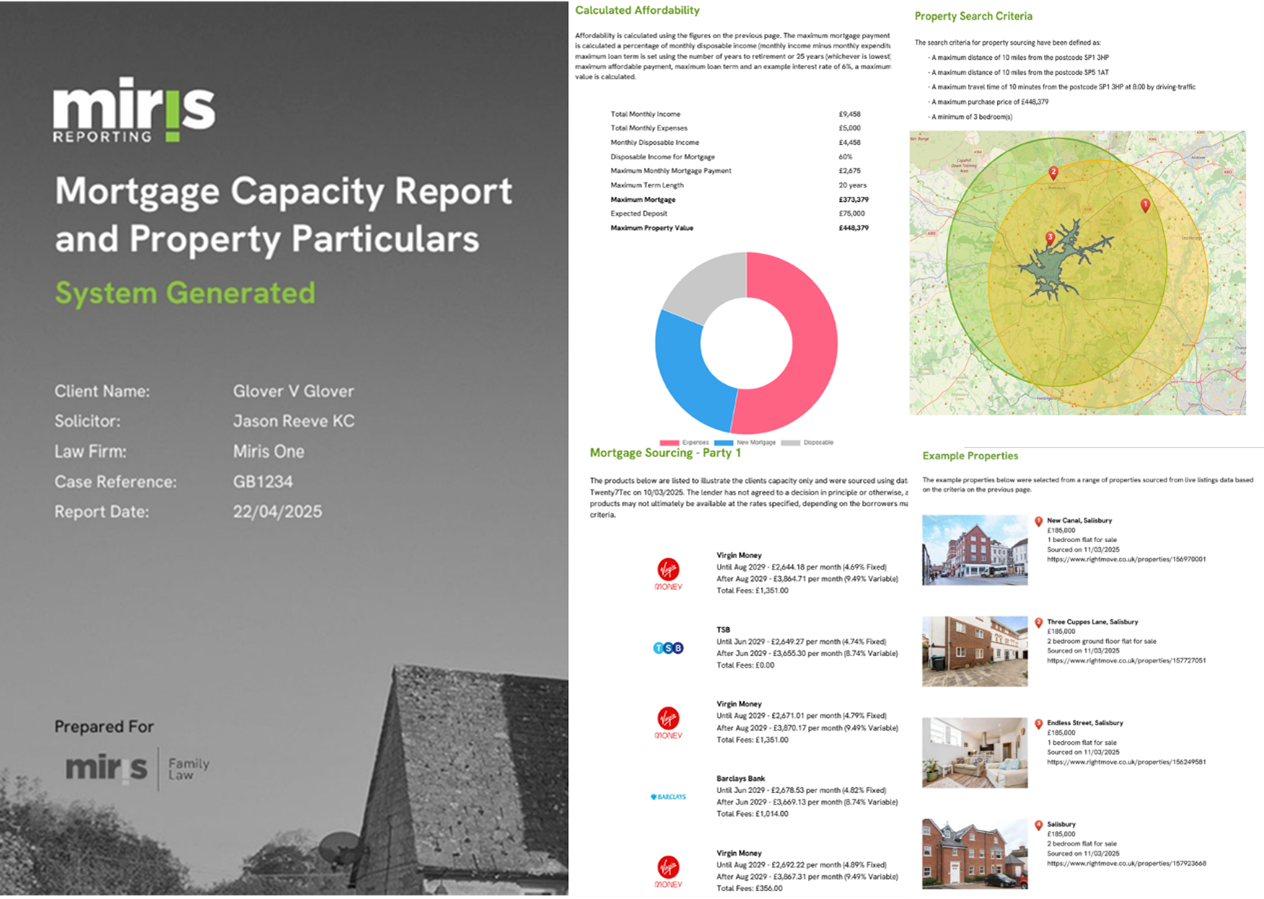
Tech Corner: Miris Reporting – Innovative Technology to Help Solicitors Prepare, Verify and Negotiate Client Housing Needs
Introduction
This article reviews how solicitors currently fulfil the filing requirements of the 2022 Statement on the Efficient Conduct of Financial Remedy Hearings in the Financial Remedies Court below High Court Judge Level (the Efficiency Statement). It documents the specific challenges of producing indicative borrowing capacity material, going on to
Simon v Simon [2025] EWFC 89
Judgment date: 07 April 2025
Peel J. Cost judgment from Peel J in ‘highly unusual’ financial remedy proceedings, in which a litigation loan provider successfully applied to be joined and to set aside a consent order which prevented them recovering a loan to W.
Issues
The issue for the court


Related
AB v CD [2025] EWFC 253 (B)
DJ Dodsworth’s short judgment gives a blueprint of how not to prepare a case for trial, and how not to make a relief from sanctions application.
Tech Corner: Miris Reporting – Innovative Technology to Help Solicitors Prepare, Verify and Negotiate Client Housing Needs
Introduction
This article reviews how solicitors currently fulfil the filing requirements of the 2022 Statement on the Efficient Conduct of Financial Remedy Hearings in the Financial Remedies Court below High Court Judge Level (the Efficiency Statement). It documents the specific challenges of producing indicative borrowing capacity material, going on to
Simon v Simon [2025] EWFC 89
Judgment date: 07 April 2025
Peel J. Cost judgment from Peel J in ‘highly unusual’ financial remedy proceedings, in which a litigation loan provider successfully applied to be joined and to set aside a consent order which prevented them recovering a loan to W.
Issues
The issue for the court
Latest
FRJ – ‘Well, He (or She) Didn’t Ask!’ – the Impact of Non-Disclosure When the Question Isn’t Asked
Is it a shield to non-disclosure by one party during financial remedy proceedings if the other party could (and perhaps should) have asked? The duty on parties to give full and frank financial disclosure is not merely a private obligation between them; it is a duty to the court.

The Reluctant Pension Credit Member
[2026] 1 FRJ 39. In the case of AP v TP [2025] EWFC 190 (B) a financial remedy order was made by consent, following an FDR, which included a pension sharing order in W’s favour. Difficulties began when W failed to provide the necessary information to permit the pension share to be implemented.

Housing Particulars: Mind The Gap
What can the court do when there's a significant gap between the bottom of the applicant’s range and the top of the respondent’s range? Can the court take up the invitation made by counsel to ‘conduct its own research on Rightmove if it wishes’?