
Interview with Lady Justice King
[2026] 1 FRJ 82. Samantha Hillas KC talks to a female trailblazer, who has been at the coalface of financial remedies work during a career so far spanning almost half a century, about her journey to the Bar, her judicial appointments and the swingeing changes in practice that she has witnessed.
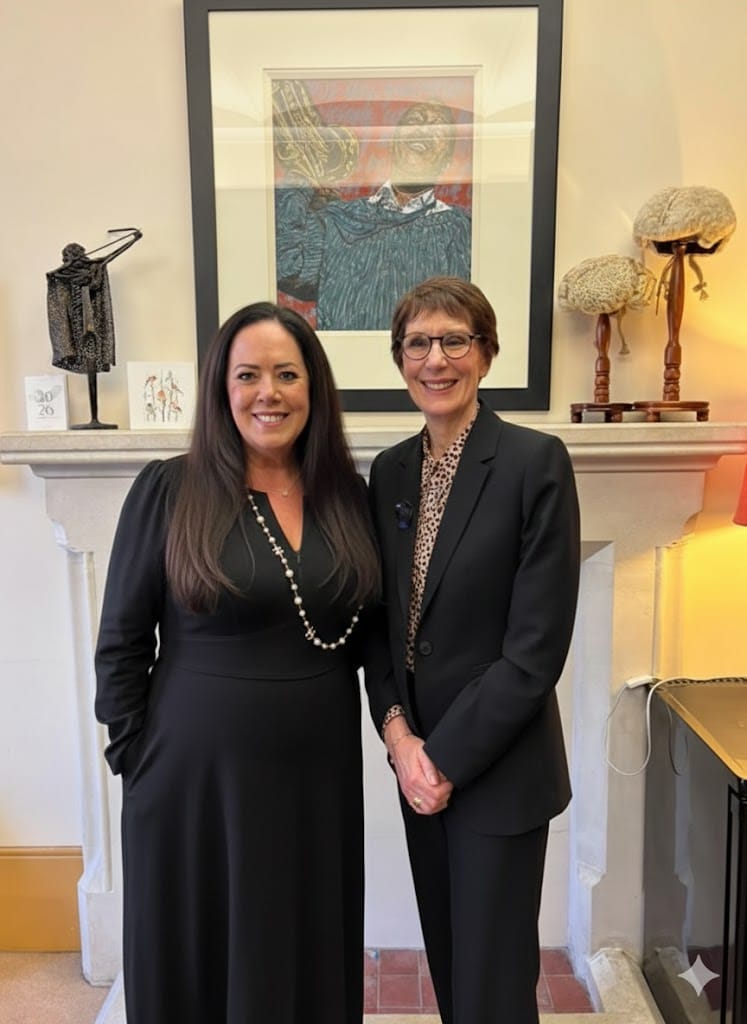
At the time I interviewed Lady Justice King in early January 2026, the hashtag ‘2026 is the new 2016’ was still trending on social media. Whilst those of us of a certain age considered it yet another ridiculous TikTok phenomena (let’s face it, most of us have jumpers which pre-date 2016), the focus on nostalgia was apt. Whilst Dame Eleanor’s interview covered issues such as transparency and non-court dispute resolution, as a woman especially it was fascinating to talk to a female trailblazer – who has been at the coalface of financial remedies work during a career so far spanning almost half a century – about her journey to the Bar, her judicial appointments and the swingeing changes in practice, especially in terms of diversity, that she has witnessed along the way. As LP Hartley expressed it wisely, ‘The past is a foreign country; they do things differently there.’
For a woman known as the Queen of the North in terms of family law, particularly in the field of financial remedies, it was something of a surprise to learn that a family law practice had never been part of Dame Eleanor’s plan. Returning to her native West Yorkshire following her call to the Bar in 1979, she secured pupillage at a general common law set, these days styling itself as Park Square Barristers, under the supervision of Shaun Spencer (later His Honour Judge Spencer QC). Her pupillage was an odd mix of ‘part crime, part chancery. Which meant I learned to ask a question and to draft a pleading.’
At that time, Dame Eleanor recalls that family practice as we now know it did not really exist, ‘This was before the Children Act. Care proceedings were dealt with by magistrates and were covered almost exclusively by solicitors.’ Private law children work – as it is known now – ‘was done by county court judges, but there was very little of it, really.’ And money? ‘The money work tended to be maintenance applications and, later, ancillary relief hearings, the majority of which were listed for just half a day’ regardless of size or complexity.
It was made abundantly clear to Dame Eleanor at an early stage of her career that she would struggle – as a woman – to develop a practice at the Bar. Although her account of her early years at the Bar is, sadly, reminiscent of the experience of many other successful female barristers in the 1970s and 1980s, it may nevertheless sound shocking to more modern ears to hear that she had ‘a very old school clerk who massively disapproved of me being in Chambers.’ Not only did he have difficulty understanding why a woman from a middle class background wanted to work at all, but he also felt that she was ‘taking work from the men who had families to support’ and made it clear that he would not be devoting any of his time to developing her career. ‘Every afternoon at about 4.30 pm, the clerk would come in with a pile of briefs and hand them out; “here’s yours Mr X, here you go Mr X” but it was always “nothing for you, Miss Hamilton”. It was usually only on a Friday when it was frantically busy that I’d get a committal for sentence, often in Middlesborough, or occasionally, I’d be sent to Huddersfield Magistrates to do the applications for drink licensing extensions.’
Dame Eleanor recollects that encountering that level of prejudice came as a huge shock. Raised by a pathologist mother as a single parent, Dame Eleanor first alighted upon the possibility of a career at the Bar after reading Henry Cecil’s books at a very tender age ‘I think I was only about 12 and remember I wanted to be in court, cross examining. I wasn’t interested in the wig and gown, I wanted to be the one asking the questions.’ Although being dyslexic was undoubtedly a significant challenge in the days before computers, she was lucky enough to be supported to the hilt by her mum, who said ‘You want to be a barrister? That’s fine. Go and find out what you need to do.’ But even with her mum’s support, there was no real guidance about how to enter the law and her teachers were not particularly encouraging. After sixth form at Queen Margaret’s School for Girls in York studying history, English and economics, she recalls she was one of only two girls who went to university, ‘I was Head Girl and very happy there, but in those days the education was pretty awful – everyone went to finishing school or cookery school or a swanky secretarial college. I wanted to go to university but I didn’t know which university to go to or how to apply. There was no internet back then to tell you what to do. A friend of mine had a sister who had been to university. She’d gone to Hull, so I sent a stamped address envelope off for the Hull University prospectus and I filled in the application form on my own without any input from anybody. That’s how I ended up at Hull reading law.’
It was at Hull University that Dame Eleanor started on a path that would see her in the Court of Appeal. She worked hard whilst at university, which may go some way to explaining why Hull University has named a library after her. She was lucky enough to be tutored by Professors Birkinshaw, Ferris and Hugh Bevan – one of her great mentors – and was amongst a cohort of future legal luminaries including her close friend Lord Justice Jeremy Baker, as well as Her Honour Judge Patricia Lynch KC and the late James Turner KC. Hull University was also where she met her ‘amazing’ husband, Tom King.
After hard work at university she rather let her hair down at Bar school having a great deal of fun at Niblett Hall which was attached to the Inner Temple and working behind the bar for pocket money. Dame Eleanor was unprepared for the prejudice she faced in the early years of practice. She was very nearly lost to the law, after reluctantly taking the view that the law was, perhaps, not for her after all. The attitudes she was coming up against were making it difficult to believe she would ever develop a successful career at the Bar. She called a ‘summit’ with Tom and her mum to consider a move into medicine, ‘I said “this is just awful, it’s not going work. I’m so grateful to you, mum, because you put me through debt-free and all the rest of it, but it’s just not working”.’ However, unbeknown to her, her mum and Tom had already had what would now be called a ‘pre-meet’ to discuss a joint approach. They were united in their support but insisted on one condition ‘My mum said: “you’ve wanted to do this for so long, just give it another year”. If it didn’t work out after that, my mum offered to pay to put me through medical school and Tom would support me. I agreed to give it another year: I felt I owed it to them because I had been so focussed on a career at the Bar for so long. I thought there must be something out there for me.’
That ‘something’ was family law. Realising there was a gap in the market because the men in chambers did not want the work, she plucked up courage and ventured into the clerks’ room, telling them ‘any of that money work or custody work, I’ll do it’. There were a few contested divorces, not many, but the odd one. And at the beginning, it was all money work although wardship soon followed and after the Children Act came into force, care work. That decision was a turning point for Dame Eleanor, thereafter she turned up day in, day out to ancillary relief cases against the likes of Paul Isaacs, Martin Wood and Annabel Carr, ‘and then of course I started having babies.’
As to the prevailing attitude towards maternity leave, Dame Eleanor reflects ‘... if you can call it maternity leave. There were no benefits or anything. I was either the first or the second woman to go back after having children in the North.’ How did she manage that in practice? ‘I only took 3 months off, which my daughters now think is just awful. Looking back on it I completely agree, but at the time, that was par for the course and I knew my mum had only had 6 weeks. I just left and said I’ll be back. I came back when I said I would, but there was somebody else sitting at my desk. They’d “given away” my tenancy because they presumed I wouldn’t be returning.’
But return she did, she and Tom managed to combine their busy legal practices with three more children, all before Dame Eleanor turned the age of 33. How did she manage the work/life balance? ‘First and foremost, I could not have done any of it, then or now, without Tom. In those days, you had to pretend your family didn’t exist. You never mentioned anything. You just did the juggling act. But honestly, it was so much easier to do that in my day than it is for young women now. I have four daughters. They all work. They all have babies, so I see it how it works and the challenges it presents for them. I was very lucky – I had a nanny. She worked until I got home from work and she was with me for 17 years, so I never got a phone call from nursery to come and collect. I never had to worry if the judge sat late. I was not paying thousands and thousands of pounds in childcare costs, which, relative to what I was earning at under 10 years’ call, would have been impossible. A nanny was completely affordable for a perfectly ordinary woman junior in a provincial set.’
Dame Eleanor reflected on how times have changed, ‘The cost of childcare is now prohibitive. Virtually no one can afford a nanny except for the super-rich’ and, now on the bench, she tries hard to remind herself of the difficulties facing parents ‘I so admire the young women that are making a go of it now. I feel irritated and defensive for young mums with the lack of emotional intelligence and lack of understanding which is demonstrated when people say “oh it’s so easy for them now they take a year off and their husbands all change nappies now”. I won’t sit late in court without asking if it is going to cause difficulties for anyone facing child care problems.’
There are other changes in practice which Dame Eleanor sees as making the job more, rather than less, difficult. One is the level of constant accessibility now expected of advocates, ‘Imagine a time before mobile phones, before emails. No pinging phones whilst you’re bathing the baby. We thought we had it hard, but it’s nothing to how it is now. We spent August as a family in Northern Ireland – that’s where both our families are from. Our house had a landline but Chambers didn’t have the land line number.’
Another was the comparative lack of paperwork, ‘I remember it was big news when the photocopier really got going because our briefs became bigger, but when the High Court judges were up, we’d do three wardships a week and we never had lever arch files because the papers simply weren’t that fat. Even in money work, we didn’t have such things as written submissions. We didn’t have computers. We didn’t have to hand in paperwork. I remember when chronologies were novel and when I first started doing them. You prepared your cross examination and submissions with pen and paper and then just stood up to deliver.’ And now? ‘Everyone has the pressure about formatting and typos and getting citations right and handing in documents in time. It’s really tough and so time consuming compared to how we had it.’
Dame Eleanor took silk in 1999: an incredibly exciting time for financial remedy practitioners. The landscape had changed overnight with White and she recalls how seismic the impact of that decision was, ‘It was absolutely extraordinary because until then, all that the wives received was a house and an income, no matter the size of the case. It was called reasonable provision.’ She recalls acting for a number of successful businessmen as she was ‘quite often instructed by the bigger commercial firms who had a private law department.’ She remembers vividly a husband client in the pre-White days, ‘He must have been worth £30 million which was an awful lot of money, especially in those days. The wife had worked in the business throughout and they had a couple of young children. She got £5 million and we all thought she’d done well.’
Then, as now, Dame Eleanor was in a small minority of money silks practising outside London. She was, in fact, the only one based in the North at that time. (HHJ Annabel Carr QC went on the bench in 2001 soon after she took silk.) Did taking silk change others’ expectations of her practice? ‘Yes, I remember people saying “well, congratulations, but what are you going to do to earn a living now?’’.’ It may have changed others’ expectations, but the lady was not for turning, ‘I got a phone call in the morning – in those days the silk announcement came out on Maundy Thursday – from one of the heads of the specialist money sets in London. He basically said “right you can stop messing around now Eleanor and get yourself down here”. I told him that I woke up that morning a married woman with four young children living and working in Yorkshire and that when I went to bed that night, I was still going to be a married woman with four young children living and working in Yorkshire.’ Being the only family silk in the North did not have the negative impact on her career in silk predicted by the naysayers, ‘I could not have survived on the money work alone and did – and very much enjoyed – substantial care cases usually involving complex medical evidence often against Anthony Hayden J and Cobb LJ. But I was lucky. I had the opportunity to break into the London work. I would be against the heavyweights such as Barry Singleton, that generation. And Martin Pointer a lot – we were both in silk at the same time and he became a friend. And then I began to be instructed by the London solicitors.’
That heavyweight silk money practice stood her in great stead when she was appointed to the High Court bench in 2008, ‘I would have the big ancillary relief beasts in front of me with their high profile, well known lawyers sitting behind them. You had to be tough and not intimidated. I would frequently hear “Well, if you don’t allow this, then we’ll just have to go to the Court of Appeal and they will sort it out”, the implication being “you Northerners don’t know what you’re doing and you’re not a proper money judge”.’ Of course, adding to that, one change for Dame Eleanor at that time is that she was no longer known by her professional name – Eleanor Hamilton QC, ‘it was definitely hard at the beginning because the London Bar were wondering “Who is this King woman they’re bringing down here that no one’s ever heard of?”. You had to be robust. I remember saying to, I think, Paul Coleridge or David Bodey, that if I hadn’t been doing that work in silk, I’d have run out of the building screaming and never come back.’
I commented to Dame Eleanor that when I told people I was interviewing her, many were interested to know why she changed her name upon her appointment to the bench. The simple answer is that, as is traditional when in practice as a woman at the Bar, she retained her maiden name – Hamilton – but that her judicial appointment gave her the freedom to use the name by which she was known at home and which she shared with Tom and four daughters. It was prompted in fact by her daughters asking, ‘Can we all be King together now?’ – ‘I felt it showed my appreciation of them, our solidarity and an acknowledgment that I had achieved what I had because of their support. I did however find it hard to let go of the name I had used professionally for nearly 30 years.’
Given the rule changes in favour of NCDR, I was interested to hear Dame Eleanor’s observations on the approach to settlement in the ‘big money’ financial remedy cases. She is clear of the value of robust judicial guidance, ‘We used to have these brilliant FDR weeks. If you were one of the financial remedy judges you had one a day and we all really enjoyed them. Paul Coleridge, Andrew Moylan, Florence Baron, David Bodey and I, we all did them. The lawyers liked them because they got a fixed date and my goodness, did we get through the work. And most of them settled.’ However, equally, ‘I don’t think we can underestimate the importance of the lawyers’ advice.’ She is a great fan of keeping cases away from final hearings ‘... through whatever form, court FDR, private FDR and other forms of NCDR – settling cases as soon as they can be settled. But people are going through a terrible time of their lives and they need good advice about settling.’
Having made her mark as a specialist on the High Court Bench, in October 2014 Dame Eleanor was appointed as a Lady Justice of Appeal, a role she finds extraordinarily fulfilling and a role to which she has added since becoming Chair of the Board of the Judicial College, overseeing the development and delivery of about 1,700 live training courses each year to 24,000 judicial office holders. Those combined roles give her a unique insight as a member of the Judicial Executive Board, ‘You’re in a small group of people; the Master of the Rolls, the Heads of the Divisions, the Senior President of Tribunals and Lady Justice Whipple who leads on diversity, all under the brilliant leadership of the Lady Chief Justice. The insights I gain from that role are invaluable.’ Those combined roles mean that Dame Eleanor often works long hours for which that Northern resilience comes in handy, ‘I’m not complaining. I have meetings most days before or after court. The workload can sometimes feel a lot, but it is really interesting, varied and worthwhile. I look forward to each day.’
I was interested to understand whether Dame Eleanor considers her background as a financial remedies practitioner an asset in the Court of Appeal, ‘It’s challenging work but very interesting. We don’t get many money cases that are heard as full appeals, but those that are heard are never routine. There are more appeals involving children which are important and have to be heard as quickly as possible. They are often reported because they are heard in the Court of Appeal and not because they involve novel points of law. The financial remedy cases that go to a full Court tend to be ones that have involved a great deal of “noise” in the financial remedy world and the judgments are going to be pored over once delivered. It is notable that many financial remedy cases heard in the Court of Appeal are followed by an application for permission to appeal to the Supreme Court’, albeit most of those applications are unsuccessful.
I was interested to know how this sits with the move towards NCDR, which would see fewer cases in the appeal courts, ‘It is important that people still use the courts when necessary. We don’t have a formulaic approach. Phases come and go – we need to be able to help the people on the ground who are dealing with cases every day to see how things are moving or changing or developing.’ Notwithstanding the move to NCDR, the Court of Appeal has seen ‘a significant increase in the number of applications for permission to appeal. The increase comes mostly from litigants in person. They are frequently second appeals; often wanting to prevent or delay enforcement. The reality with litigants in person is that they often simply don’t agree with the outcome and see that there is right of appeal so they apply. They don’t really understand what the second appeals test is, even though they are told. For them, the point of principle or compelling reason is that they are outraged; they believe the judge made the wrong decision. We regularly used to have only have four, five, six in the system at any one time and now it’s more likely to be 30. It’s a big, big change.’
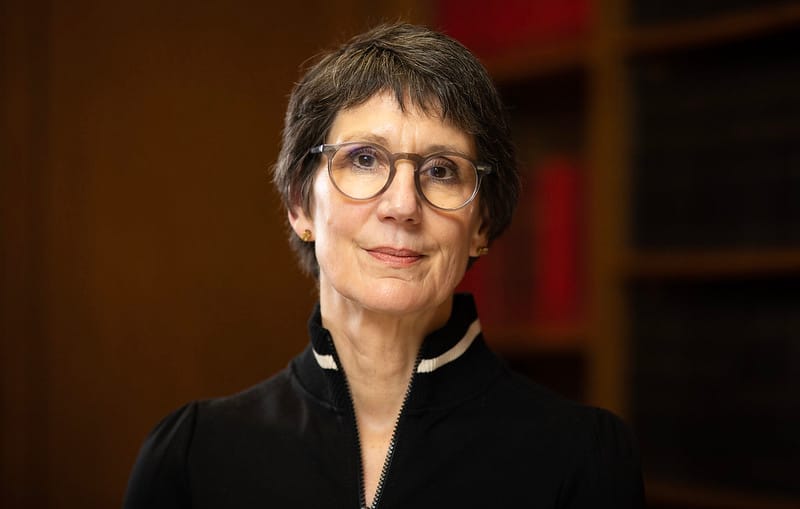
It is clear she views specialisms as important in the Court of Appeal, ‘The Master of the Rolls keeps an eye on how the constitutions are working, that there’s a proper mix and also, critically, that that there are judges with the right expertise. In the old days, it used to be that you’d have a constitution of three dealing with whatever came in front of them over a 3-week period. There’s been a subtle change because now, sometimes you can be in two constitutions for a week. But that’s because there is an increasing recognition that if someone’s found themselves in the Court of Appeal, it’s their life, whether it’s their family, whether it’s their housing, whether it’s patents, whether it’s the administration of their company – it may mean complete disaster for people and they’re entitled to have someone with the relevant expertise sitting. And so, whilst we still are all general journeymen in many respects, that doesn’t stop you having your expertise in particular areas.’
Does she see that mirrored in her work as Chair of the Judicial College? ‘Yes, there are more judges expressing an interest in doing financial remedy work. One reason may be that they have a background as civil litigators and may feel quite comfortable with financial remedy work. We have become more and more involved in financial remedy training.’ Dame Eleanor has noticed an increasing trend of women applying to become District Judges. She worries that some may apply too early, failing to recognise that ‘they’re going to be doing it for a long time’, but also acknowledges that a judicial career may suit those with young families. However, she remains concerned at the rate of attrition of women at all levels of the legal profession, ‘Even if they don’t leave, they cut back. They’re understandably doing less while the children are young. If you look at the wider picture and it’s the same – women on boards, women becoming partners in firms of solicitors, women applying for silk.’
Before we finished, we reflected on a couple of wider issues in the financial remedies sphere. Dame Eleanor was, perhaps naturally, careful not to be drawn into expressing a view about the forthcoming consultations on proposed legislative reform of financial remedies law, observing only that ‘we are dealing with individuals and families in all sorts of various different circumstances and one size does not fit all. If we are going to carry on being compassionate, to continue to put the needs the children first, it becomes complicated when considering how that fits in with a completely codified resolution. What I’m saying is you’d need considerable thought about it. I would hate to see the baby thrown out with the bath water.’
She is also hugely in favour of transparency, ‘It is really important. We do fantastic work and people should be able to see it. We’ve been doing the same in the Judicial College. We have learned some lessons based on transparency in the family courts. We do wonderful training in the judicial college, especially focussing on domestic abuse.’ I ask if there is a difference, however, between transparency and the naming of parties in financial remedy proceedings? ‘That is a more difficult issue. When they come to us in the Court of Appeal, they are named, but that’s because we are a public court.’ But it is nonetheless important for people to understand the role of courts and what goes on in them, ‘we need the academics, we need the periodicals, we need the commentators to assist the public in making sense of it all.’ A fan of the Financial Remedies Journal, then? ‘Yes. It’s really good.’
In closing our interview, I asked Dame Eleanor to reflect on her fascinating journey: on the changes she had seen, particularly in practice, and asked whether she would do anything differently or if she had any advice for women coming into the profession. She is clear that, to succeed in this profession, a capacity for hard work is a given, ‘Sometimes people are almost ashamed to say they work hard. But as I’ve said to my children and I say to all my wonderful judicial assistants – if you don’t work hard, you will never achieve your full potential.’ She recalls that ‘I worked hard at school. I worked hard at university. Silk was just gruelling and I still work hard’, but there is a balance to be struck and she welcomes the increasing focus on wellbeing, ‘Going back to what we were saying about the old days, when you had to pretend not to have a life outside of work. I think we owe it to the next generation not to be like that. It’s important to be able to say no. I don’t do early morning meetings on Thursdays because I have my one-hour torture session with my personal trainer and I’m not going to miss it. In our more transparent world, it’s important to be able to say “I’m not doing that because I’m doing something with one of the children or my grandchildren’’.’
The importance of family took us back to the beginning of Dame Eleanor’s journey and ended our interview on a refreshingly upbeat note. She is grateful to her mum, herself a feminist trailblazer, for allowing her to have choices. She hopes she has done the same for her own four daughters. When asked ‘What’s next for Lady Justice King?’, the theme of family was again evident, ‘Actually, I’m really content. I have a job I love. I have fantastic colleagues. I have the best fun, a terrific husband and four daughters who, touch wood, are all in a good place with their own relationships, all busy having babies and who are all very close. It may sound really naff, but I feel that I am just an incredibly fortunate woman. Life is good.’
This is an article from the forthcoming Financial Remedies Journal 2026 Issue 1.
Related
Chair’s Column (Spring 2026)

The Reluctant Pension Credit Member
Sir James Munby: an Obituary


Related
Chair’s Column (Spring 2026)
The Reluctant Pension Credit Member
Sir James Munby: an Obituary
Latest

Portals: Bringing It All Together

FRJ – ‘Well, He (or She) Didn’t Ask!’ – the Impact of Non-Disclosure When the Question Isn’t Asked