
Sir James Munby: an Obituary
[2026] 1 FRJ 2. Sir Nicholas Mostyn writes about the life of Sir James Munby, who died on 1 January 2026: "a great leader, a brilliant historian, a remarkable lawyer, and a superb writer".
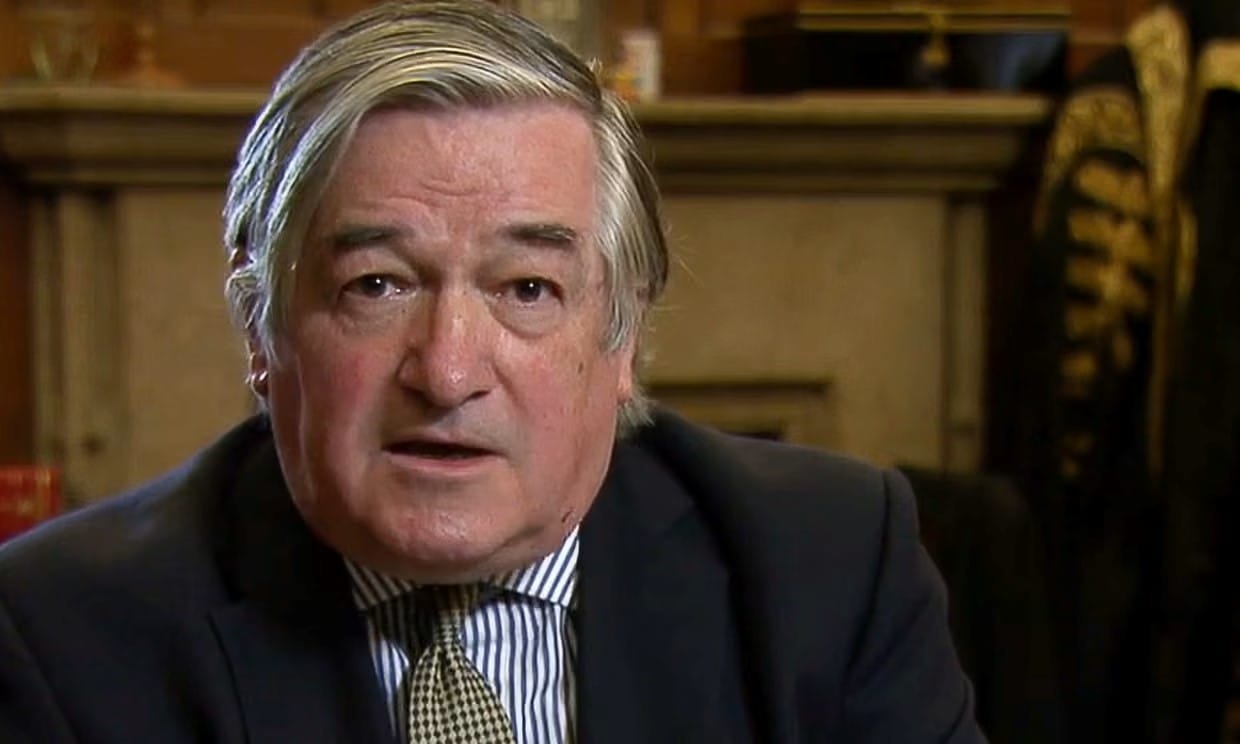
I met James Munby for the first time in the autumn of 1998 when I went to his chambers in Lincoln’s Inn to settle with him the Statement of Agreed facts and Issues for the proposed appeals by both sides to the House of Lords in the case of White v White. He was Mrs White’s third QC.
I had heard he was exceedingly clever; meeting him only confirmed it. While he was a distinguished Chancery silk known for his grip on company law, his practice had a compassionate reach: he often worked for the Official Solicitor on behalf of gravely ill adults and children. Somehow, he also found room for a specialist interest in the complexities of media contempt. I knew that he had made the occasional foray into the murky waters of ancillary relief and that he had been ‘brutally put down’ (his own description) by Thorpe LJ in the case of Dart v Dart [1996] 2 FLR 286, where he had presciently argued that a wife should be entitled to share in her husband’s fortune. He had however appeared in the first ever ancillary relief case heard in the House of Lords – Piglowska v Piglowski [1999] 1 WLR 1360.
I recall a room which was unimaginably untidy. It was like a scene from Gormenghast. He was friendly and charming. Although he was 9 years older than me and 10 years ahead of me in call, he did not patronise me or otherwise pull rank.
We soon realised that we were never going to agree the facts, let alone the issues, as he, unlike his predecessors, unsurprisingly wanted both the facts and issues to reflect Mrs White’s status as a business partner. So, we settled on the technique of ‘Mrs White says … Mr White does not agree’ which somehow passed muster before their Lordships.
Most unusually, and for reasons which were never explained, the Appeal Committee decided that there should be an oral hearing of the parties’ petitions for leave, and so in February 1999 he and I appeared before Lord Steyn, Lord Hope and Lord Millett. I was comprehensively mauled by the committee who turned to my opponent expecting him to apply the coup de grâce, only to be astonished to hear him sublimely argue that both parties should be given leave to appeal. And this came to pass. True to form Mrs White immediately sacked Munby and instructed James Turner QC for the appeal proper, the result of which, as we all know, changed everything. But that seismic shift would never have happened but for Munby’s brilliant advocacy.
That was my one and only case against him as counsel.
James Munby was born in 1948. At Oxford he was an Eldon Scholar. He was called to the Bar in 1971 and took silk in 1988. In his 29 years of practice, he appeared in a prodigious number of important cases. Westlaw lists 90 which were reported. It is not the sheer number that makes one stretch one’s eyes but the extraordinary diversity. Consider the last ten cases in the list, decided in 1999 and 2000. They encompassed the sterilisation of a mental patient; the statute of limitations; corporate insolvency; secret trusts; the duty of care of the ambulance service; the treatment of tax evasion in ancillary relief; charging orders over assets of offshore trusts; medical treatment of a seriously ill child in Russia; and of course, Piglowska.
He was made a High Court Judge on 2 October 2000, a few weeks before the House of Lords gave judgment in White v White [2000] UKHL 54, [2001] 1 AC 596.
His appointment to the High Court bench was inevitable. It was said at the time that he was of the calibre to have been appointed to each of the three Divisions; and it is the opinion of many that had he been appointed to either of the other two Divisions he could equally well have risen to its leadership.
He was a puisne judge for 9 years. He did not confine himself to judging. He was an active and assiduous commentator. I have a list of 38 speeches and other writings made by him following his appointment as a judge; of these seven (including two memorable book reviews) were delivered as a puisne. They include some themes which would later become habitually associated with him: transparency, and the protection of vulnerable adults under the inherent jurisdiction.
In those 9 years he delivered 296 reported judgments, of which 251 were in the High Court and 45 as an additional judge of the Court of Appeal. In the High Court, judgments were delivered not only in the Family Division but also in the Administrative Court to which the then President, Elizabeth Butler-Sloss, had arranged for his appointment. Again, the range and diversity of the judgments is remarkable. Only a mere ten were later positively disapproved.
Reading his judgments at the beginning of his judicial career is a great pleasure. Unlike so many judges, he had the knack of making a judgment, even a long judgment, highly readable. Their readability will have normally been enhanced by his inclusion of an alluring legal-historical delicacy or an apposite literary reference. Everyone will remember KSO v MJO [2008] EWHC 3031 (Fam), [2009] 1 FLR 1036 where he not only compared the case to Jarndyce v Jarndyce but also included a substantial passage from Bleak House in an Appendix.
Further, the reader collects from his judgments a strong attachment to the interests of the weak, powerless, and dispossessed, whether they were failed asylum seekers awaiting deportation, coerced wives or seriously unwell adults and children. A recurring theme is the defence of the weak against a monolithic, unthinking state.
It is true that his early judgments were long, but they were none the worse for that and it is my strong opinion that the public dressing down meted out to him by Konrad Schiemann LJ in the confiscation case of Customs and Excise Commissioners v A [2002] EWCA Civ 1039, [2003] Fam 55 was, to put it mildly, unfair.
I appeared before James Munby in a handful of cases including Al-Khatib v Masry [2002] EWCA Civ 1045, [2002] 1 FLR 1053, where he laid down the definitive set of principles to be applied where fact-finding about the scale of undisclosed assets has to be almost entirely inferential. Most notoriously, my final appearance before him was in Spencer v Spencer [2009] EWHC 1529 (Fam), [2009] 2 FLR 1416 where he refused a joint application to exclude the press from that hearing. His generosity of spirit is well-illustrated by his words about this episode in an article in the FRJ:
‘Spencer, of course, is best known in many quarters because of some choice words which Mostyn reportedly used of me following my judgment. Given their public notoriety, I take this opportunity to make clear that I have never borne any grudge against him for what he said. How often have we all come out of court after a long and gruelling day which has not gone entirely as expected and made some unflattering comment about the judge which we would be mortified to think would ever come to the judge’s ears – his only mistake was not to think about the possible consequences if his words were ever to become public.’
Munby served as Chairman of the Law Commission from August 2009 to August 2012 and received the customary elevation of the holder of that office to the Court of Appeal. On 11 January 2013 he became President of the Family Division. He was forced to retire on reaching 70 on 27 July 2018.
Under his leadership the Law Commission produced a number of highly important reports, including a report proposing the abolition of the contempt offence of scandalising the court, which was implemented in the Crime and Courts Act 2013. The offence was committed where a person made a statement orally or in writing which was seriously derogatory of the judiciary, either of individual judges or courts or of the judiciary in general or a section of it. It was virtually obsolescent in England and Wales. It was said in Parliament that judges should be able to put up with offensive criticism with a wry smile and a shrug of the shoulders.
He was particularly proud of the project about Level Crossings which reported in September 2013, a year after his tenure as chair had come to an end. That piece of work would have been close to his heart as he always described himself as a passionate ferro-equestrian. He never obtained a driving licence or flew in an aeroplane, but, as President, he did travel to Dublin to give a speech. He travelled by train and ferry. I believe that was his only venture ‘overseas’. He had however a copious knowledge of mountain railways all over the world; for example, he knew every detail of the Tramway du Mont Blanc (which I thought I knew well). On his retirement the current and past members of the Family Division organised for him a farewell steam excursion on the Kentish coast for which the leading locomotive was named and emblazoned ‘The Flying Munby’.
After returning to the fray in 2012 the volume of judgments increased almost exponentially. As Lord Justice Munby he issued 86; as President of the Family Division a further 251, giving a total of 633, which surely must be a record.
He issued a number of highly important judgments in the field of financial remedy law and practice. Some have not survived later scrutiny. For example, his insistence in Traversa v Freddi [2011] EWCA Civ 81, [2011] 2 FLR 272 that an ex parte grant of leave under Part III of the 1984 Act could only be set aside if the respondent could show a ‘knockout blow’ was disapproved by the Supreme Court in Potanin v Potanina [2024] UKSC 3, [2024] AC 1063. Similarly, his stipulation that an arbitral award could only be challenged on appeal where an error of law was shown, was not followed by the Court of Appeal in Haley v Haley [2020] EWCA Civ 1369, [2021] Fam 317.
James Munby applied to both the substantive and procedural law of ancillary relief a vast legal knowledge, encompassing not only current practice, but also its historical development. It is doubtful that any modern judge has possessed a historical command of the law to rival his. It is no exaggeration to say that he was the Stephen, Blackstone, Coke, or Hale of our age. As such, he waged a lonely battle against what he saw as family law isolationism, the mentality that says that family law is a foreign country where things are done differently. In A v A [2007] EWHC 99 (Fam), [2007] 2 FLR 467 he said the Family Division cannot ‘simply ride roughshod over established principle’ and that ‘the relevant legal principles which have to be applied are precisely the same in this Division as in the other two Divisions’. In Richardson v Richardson [2011] 2 FLR 244 he said ‘the Family Division is part of the High Court. It is not some legal Alsatia where the common law and equity do not apply’. And in Kerman v Akhmedova [2018] 4 WLR 52 he said ‘let it be said and understood, once and for all: the legal principles – whether principles of the common law or principles of equity – which have to be applied in the Family Division … are precisely the same as in the Chancery Division, the Queen's Bench Division and the County Court’.
I believe that he came to recognise in his retirement that this campaign would be hard to win; that family law exceptionalism was a hydra incapable of destruction; and that this was particularly so as regards the cult of secrecy which envelopes almost all family proceedings.
Some of his ancillary relief judgments have acquired permanent status. The questionable practice of obtaining and using what used to be called Hildebrand documents was definitively and permanently proscribed by his judgment in Tchenguiz v Imerman [2010] EWCA Civ 908, [2011] 2 WLR 592. Similarly, the lazy practice of treating the assets of a trust as the absolute property of a beneficiary was brought to a juddering halt in A v A [2007] EWHC 99 (Fam), [2007] 2 FLR 467 where he proclaimed that a spouse who seeks to extend her claim for ancillary relief to assets which appear to be in the hands of someone other than her husband must identify, and by reference to established principle, some proper basis for doing so. Where the assets are in a trust which is said to be a variable nuptial settlement, advisers will invariably turn to Ben Hashem v Ali Shayif [2008] EWHC 2380 (Fam), [2009] 1 FLR 115 at [235]–[260] for the classic exposition of the necessary elements that must be proved. Where a party seeks to set aside an order advisers will invariably turn to L v L [2006] EWHC 956 (Fam), [2008] 1 FLR 26 where the relevant principles are set out with clarity, and where he explained, citing Lopes LJ in 1896 and Sir Robert Megarry in 1968, that the court’s function when approving a consent order is to act as a watchdog and not as a bloodhound or ferret.
Upon his appointment as President in 2013, he nominated me as judge in charge of the High Court money list. He called me to his room, already by then showing signs of the anarchy I had previously observed back in 1999, and showed me a volume of Chancery Division standard orders. He asked me to assemble a team to draft every conceivable type of family law order. This was a Sisyphean task on which he at all times kept a beady eye and which was not completed until 2017.
Much has been written about his role in the creation of the Family Court, which came into being on 22 April 2014 pursuant to the Crime and Courts Act 2013. He had been appointed President on 11 January 2013. The Crime and Courts Bill had almost completed its Parliamentary journey by then; it had fully cleared the House of Lords and received its second reading in the House of Commons on 14 January 2013, 3 days after his appointment. He therefore had little time to identify problems and inconsistencies in the Bill of which the most prominent was the failure to include TLATA cases in the new court’s jurisdiction. Unfortunately, he was not able to have that omission corrected.
In contrast to the creation of the Family Court, where he was presented with a fait accompli, Munby’s decision in 2017 to create the Financial Remedies Court was his alone. The work for that launch extended beyond his retirement, but his vision was vindicated in February 2021 when the new court came into being. This new specialist court has been a resounding success, so much so that many of its sitting days have been arbitrarily removed by Government to seek to address the Crown Court backlog. In this regard the success of the Financial Remedies Court has been its undoing. It appears that Government thinks that it can by virtue of its efficiency well cope with the loss of so many sitting days. The result will be very hard on litigants as hearings are inevitably cancelled. I know that Munby was appalled by this.
Following his retirement, James Munby was an indefatigable campaigner on a number of fronts. With me, he fought what has seemed to be a lonely battle to try to rid financial remedy cases of what we maintain is an unlawful policy of blanket secrecy. To that end he published seven major essays.
He has campaigned vigorously for the contempt rules governed by section 12 of the Administration of Justice Act 1960 to be reformed. At the time of his death he and I had jointly advanced a modest proposal to amend the rules so that former wards of court can talk about their wardship, without any possibility of falling foul of section 12, once the proceedings have been finally concluded and all the children have grown up. That proposal is making glacial progress through the Rule Committee and, sadly, he will not see its outcome.
In addition, he has published a number of highly erudite accounts of notorious Victorian and Edwardian divorce cases including the case of Mordaunt v Mordaunt where the Prince of Wales (later Edward VII) gave evidence denying an accusation of adultery, and the entirely collusive hotel divorce of Simpson v Simpson which led to the abdication of Edward VIII. Unpublished at the time of his death was a massive work analysing the significance of the decision of the House of Lords in Scott v Scott [1913] AC 417 and bemoaning its astonishing fate into oblivion. At the time of his death, he and I were working on a study to see if between 1920 and 1970 there existed an informal bar on a divorced man becoming a High Court judge and, if so, whether it made any difference whether he was the guilty or innocent party in the divorce.
I was closely involved with him in almost all of his projects. A week would not pass without us exchanging emails on some obscure point of legal history. In 2025 alone he sent me 144 emails about these various projects.
He was a great leader, a brilliant historian, a remarkable lawyer, and a superb writer. Yet, transcending these professional gifts, he was a kind, witty, and deeply compassionate human being whom I was fortunate to count as a close friend. His departure leaves a profound void in my life, as I am sure it does for the many others who knew him.
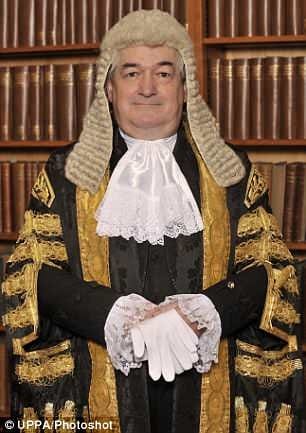
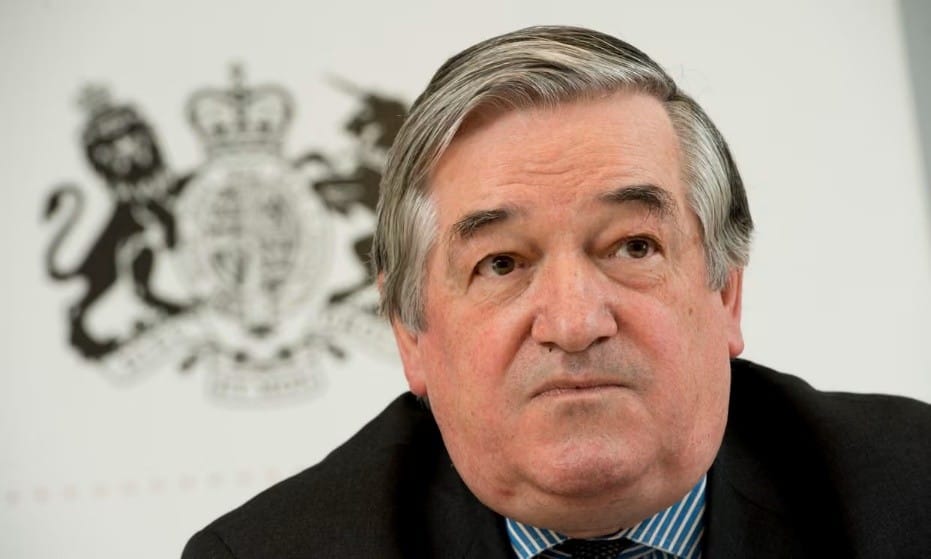
Sir James Munby: 27 July 1948–1 January 2026
Related
Chair’s Column (Spring 2026)

The Reluctant Pension Credit Member
Section 35: Dead Letter or Living Instrument? The Contractual Status of Agreements, and the Scope of the Court’s Power to Vary Them


Related
Chair’s Column (Spring 2026)
The Reluctant Pension Credit Member
Section 35: Dead Letter or Living Instrument? The Contractual Status of Agreements, and the Scope of the Court’s Power to Vary Them
Latest
FRJ – ‘Well, He (or She) Didn’t Ask!’ – the Impact of Non-Disclosure When the Question Isn’t Asked
The Reluctant Pension Credit Member