
Quan v Bray [2017] EWCA Civ 405
Judgment date: 16 June 2017
Related
MK v SK [2026] EWFC 28
Peel J. Final hearing in financial remedy proceedings with findings of non-disclosure against H. Final orders determined with reference to W's needs.

Piercing Trust Structures in Switzerland in Aid of Financial Claims in England
[2026] 1 FRJ 26. Swiss courts possess domestic tools to pierce through foreign trust structures and make orders in respect of their underlying assets. This article examines what those tools are and how they may be deployed in aid of financial remedies proceedings in England.
Trusts in Divorce Proceedings: The Trustee’s Adviser’s Perspective
[2026] 1 FRJ 30. This article provides a perspective on trusts within English financial remedy proceedings, from the perspective of trustees and law firms in Jersey. These days, the view of offshore trusts as a vehicle for hiding assets from authorities, creditors and spouses is unlikely to be true.


Related
MK v SK [2026] EWFC 28
Peel J. Final hearing in financial remedy proceedings with findings of non-disclosure against H. Final orders determined with reference to W's needs.
Piercing Trust Structures in Switzerland in Aid of Financial Claims in England
[2026] 1 FRJ 26. Swiss courts possess domestic tools to pierce through foreign trust structures and make orders in respect of their underlying assets. This article examines what those tools are and how they may be deployed in aid of financial remedies proceedings in England.
Trusts in Divorce Proceedings: The Trustee’s Adviser’s Perspective
[2026] 1 FRJ 30. This article provides a perspective on trusts within English financial remedy proceedings, from the perspective of trustees and law firms in Jersey. These days, the view of offshore trusts as a vehicle for hiding assets from authorities, creditors and spouses is unlikely to be true.
Latest
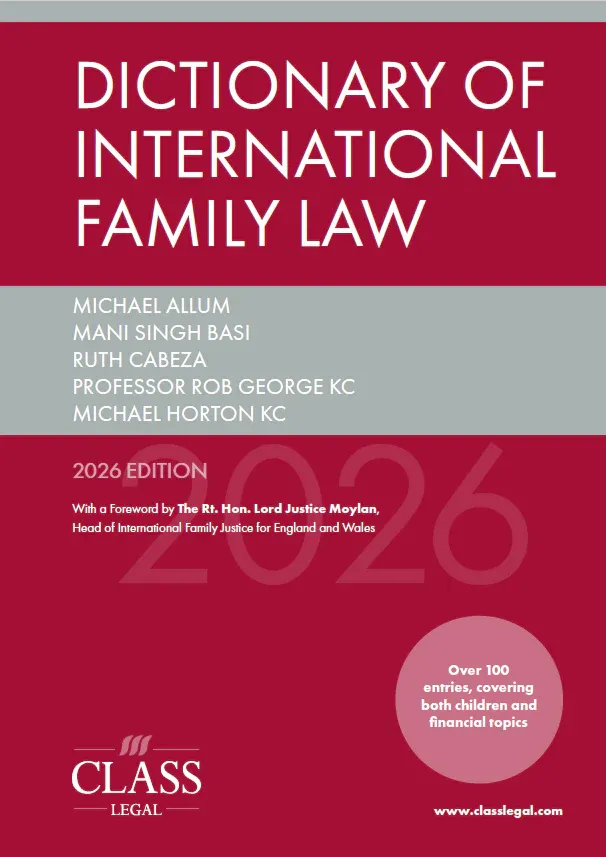
Book Review: Dictionary of International Family Law
The Dictionary of International Family Law is the latest addition to the series of Class Legal Dictionaries. It joins this distinguished family with confidence and purpose.

Beyond Thing 1 and Thing 2: Cryptoassets and the New Property Landscape
For almost 140 years, bright-eyed law students have been taught that the world of personal property contains only two species of thing: those which can be physically held, and those which can be enforced. Cryptoassets forced the issue.
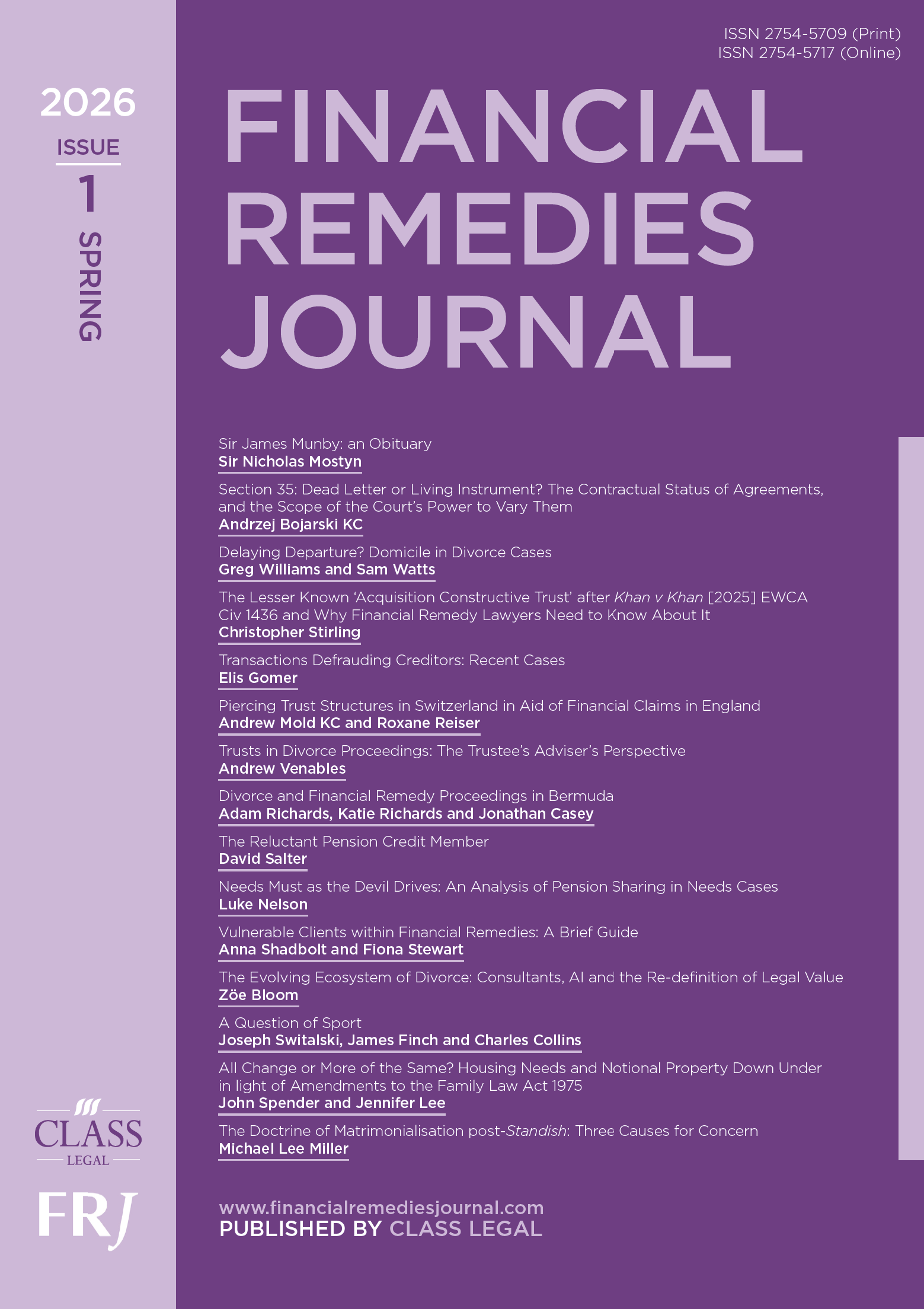
Now out: Financial Remedies Journal 2026 Issue 1 (Spring 2026)
The new issue of the Financial Remedies Journal is now available.