
Chekov v Fryer & Fryer [2015] EWHC 1642
Judgment date: 23 June 2015
Related
Armstrong v Armstrong & Anor (Re Remedy) [2025] EWHC 2054 (Ch)
Mr Andrew Sutcliffe KC sitting as a High Court judge. Judgment considering the appropriate remedy for a claimant who had proved his proprietary estoppel claim and his alternative claim for entitlement under the Inheritance (Provision for Family and Dependants) 1975 Act.
Klein v Cripps Trust Corporation [2025] EWHC 688 (Fam)
Williams J. Judgment to determine reasonable financial provision under the Inheritance (Provision for Family and Dependants) Act 1975 for the spouse and son of the deceased following limited provision for them in the Will and mismanagement of the Will by the executrix.

Bad Behaviour and Broken Bonds: A Comparison of Conduct in 1973 and 1975 Act Claims
Introduction
Fifty years ago, the Inheritance (Provision for Family and Dependants) Act 1975 (1975 Act) was enacted in an expansion of the court’s statutory powers for financial provision on death.[[1]] Two years earlier, Parliament had enacted the Matrimonial Causes Act 1973 (MCA 1973) to alter the court’s


Related
Armstrong v Armstrong & Anor (Re Remedy) [2025] EWHC 2054 (Ch)
Mr Andrew Sutcliffe KC sitting as a High Court judge. Judgment considering the appropriate remedy for a claimant who had proved his proprietary estoppel claim and his alternative claim for entitlement under the Inheritance (Provision for Family and Dependants) 1975 Act.
Klein v Cripps Trust Corporation [2025] EWHC 688 (Fam)
Williams J. Judgment to determine reasonable financial provision under the Inheritance (Provision for Family and Dependants) Act 1975 for the spouse and son of the deceased following limited provision for them in the Will and mismanagement of the Will by the executrix.
Bad Behaviour and Broken Bonds: A Comparison of Conduct in 1973 and 1975 Act Claims
Introduction
Fifty years ago, the Inheritance (Provision for Family and Dependants) Act 1975 (1975 Act) was enacted in an expansion of the court’s statutory powers for financial provision on death.[[1]] Two years earlier, Parliament had enacted the Matrimonial Causes Act 1973 (MCA 1973) to alter the court’s
Latest
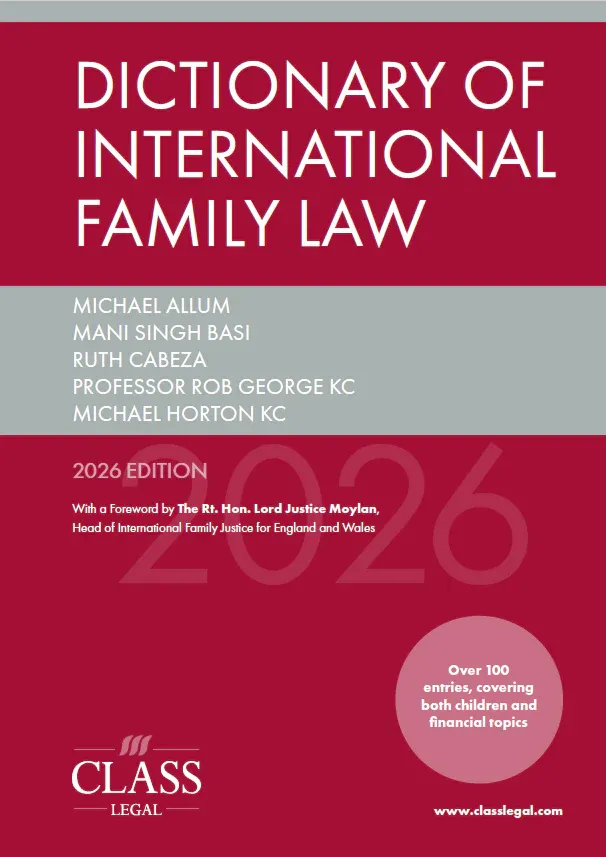
Book Review: Dictionary of International Family Law
The Dictionary of International Family Law is the latest addition to the series of Class Legal Dictionaries. It joins this distinguished family with confidence and purpose.

Beyond Thing 1 and Thing 2: Cryptoassets and the New Property Landscape
For almost 140 years, bright-eyed law students have been taught that the world of personal property contains only two species of thing: those which can be physically held, and those which can be enforced. Cryptoassets forced the issue.
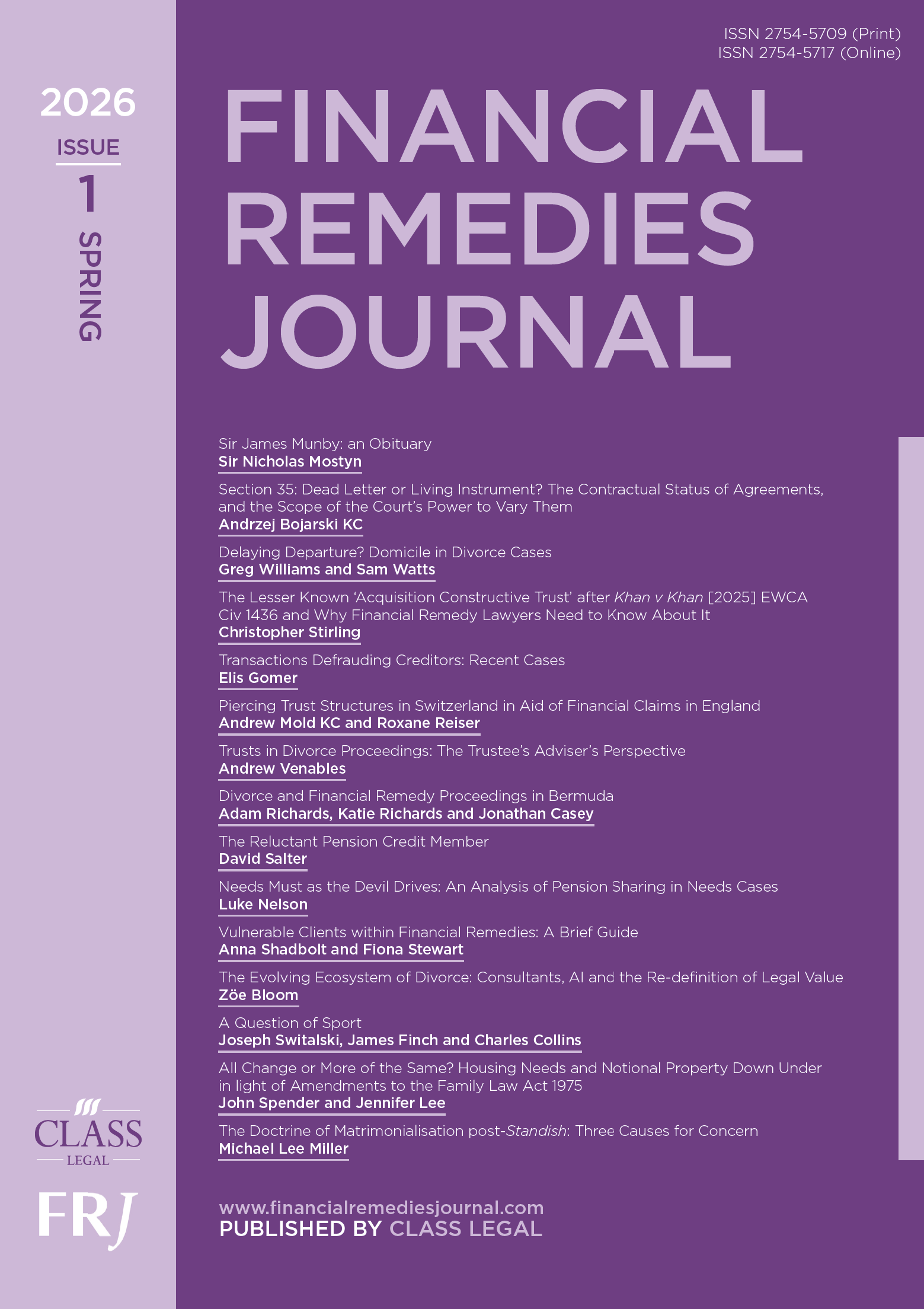
Now out: Financial Remedies Journal 2026 Issue 1 (Spring 2026)
The new issue of the Financial Remedies Journal is now available.