
The Financial Remedies Conference 2026
Elizabeth Bowden reports from the Class Legal Financial Remedies Conference.
What makes a good conference? For me, it’s merch, food and speakers, not necessarily in that order. From the moment I walked into the Class Legal Financial Remedies Conference, it delivered on all three in spades. It also delivered an unexpected surprise.
Having made my way to the mini Danish pastries and availed myself of all the raspberries, blueberries and blackcurrants, I was ready to take my new Class Legal branded hardback notebook and pen (Merch ✓) into the theatre.
The morning session set a high standard, with Mr Justice Peel delivering the introduction; his fire safety briefing was delivered with the same solemnity as a judgment; no one was going to ignore the fire alarm.
Sir Nicholas Mostyn followed with a poignant tribute to the late Sir James Munby. Sir Nicholas gave the delegates insight into his personal friendship and his professional respect for Sir James’ use of language in his judgments. It was truly special to hear one of the profession’s most respected judges say that he wished his own judgments had matched that standard. It was a humbling reminder that judges are human too.
The Right Honourable Lord Justice Baker gave the keynote speech. What I loved most was that Lord Justice Baker took the opportunity to tell us that, in one of the few financial remedies cases he handled at the Bar, he succeeded against HHJ Hess. Later, HHJ Hess noted that recollections may differ!
The intellectual momentum continued with Emily Ward’s case round-up. Emily wove Taylor Swift and Celine Dion references into a complex legal summary, a masterclass in engagement, proving that even the potentially driest procedural and case update can be curated with flair. Her handout ran to more than 100 pages and was focused, relevant and immensely useful. Its length reflected the volume of reported cases in the last 12 months. Emily touched on the tensions arising from some of the reported decisions at High Court level in relation to conduct and matrimonialisation.
After the morning break (excellent coffee and snacks ✓), we returned for a panel discussion chaired by Joshua Viney, although I did for a moment think Jack Whitehall had been engaged by Class Legal; the hair similarity was uncanny. Viney did an outstanding job, landing an early joke about Thomas Harvey and legal AI with the same skill as Whitehall; perhaps the similarities go beyond hair? The costs discussion was lively, with Calderbanks becoming something of an age divide. Fun fact I picked up: in France correspondence between lawyers is confidential, even from clients.
After lunch (really good braised lamb and sponge cake ✓), Sarah Phipps KC invited us to ‘Alsatia’, questioning whether financial remedies law operates on a metaphorical desert island where ‘normal’ rules do not apply. Her conclusion was clear: just as judges have indicated in their judgments over time, financial remedies law should not operate as a procedural outlier, yet gaps in the rules remain. As a profession, she asked us to consider whether these gaps should remain. Sarah left us to consider what that change should be. I would welcome specific rules for intervener claims. If that is too much, the Family Court would benefit from clearer rules/practice directions on capacity, especially where the Official Solicitor refuses to act.
Next up was His Honour Judge Hess, who delivered the Financial Remedies Court update. This was the kind of ‘stats fest’ that I really enjoy. As individual practitioners, you rarely get to see a bird’s-eye view of how the whole FRC is working; the stats gave us that. My (subjective) key takeaways:
- In London, it is 90.6 weeks from Form A to Final hearing – but around 70 weeks in other locations.
- Do not upload a draft order (even if agreed with the other side) until the judge has approved it and asked you to upload it.
- If you are instructed on a direct access basis – get yourself on the Portal, especially if you are in front of HHJ Hess.
Another interesting point I picked up: the Ministry of Justice is actively exploring AI predictive tools. No doubt everyone will be watching to see how that develops.
Zoe Saunders followed HHJ Hess with a sharp analysis of nuptial agreements. Saunders identified these as a significant growth area for practitioners, though her comment that she does not draft them, as she has enough work litigating professional negligence claims arising from poorly drafted agreements, served as a warning to those entering the field.
The President of the Family Division, Sir Stephen Cobb, drew the speaker element of the conference to a close. He addressed head-on the systemic difficulties facing the FRC. Meeting these issues in this way caused the room to immediately listen and engage. The President confirmed that sitting days are under review and signalled that courts will remain vigilant against ‘forum shopping’ and ‘duplicate litigation’. The President also reflected on his financial remedy judgments and recalled with humour and good grace the ‘footnote incident’ that occurred when he and Sir Nicholas were of differing views on interim orders for sale. With Sir Nicholas in the front row, everyone in the theatre felt as though they were sitting in the judicial common room, and they loved it. This interaction, a blend of intellectual sparring and mutual respect, epitomises the Financial Remedies Conference’s unique culture.
The day’s final session was a recording of the Law and Disorder Podcast. Whether you were already a listener or not, it was an engaging discussion of how England and Wales treat cohabiting relationships compared with Australia. Greg Howe was formidable and had the audience on his side. Baroness Helena Kennedy gave everyone a dose of reality (particularly the reality for women), and Lord Falconer brilliantly kept the debate going. Sir Nicholas steered the podcast with the skill we all know and love. Everyone was rooting for Graeme Fraser putting forward the case for the Government’s proposals. We were all impressed by how he stood firm under fire. I am a fan of the Law and Disorder Podcast, so I was in absolute heaven, especially when I got to say hello and thank you to the Baroness Kennedy. When I met her as a 19-year-old at uni, not knowing if barristering was for me, she set me on this path. I wonder how many people she has brought to the Bar?
From Mr Justice Peel opening the conference to the President of the Family Division closing the speaker programme, each speaker did or said something that made everyone in the room feel part of something larger. The unexpected gift I took away from the Class Legal Financial Remedies Conference was a sense of community. As someone who attended the conference on my own, I left feeling very much part of it.
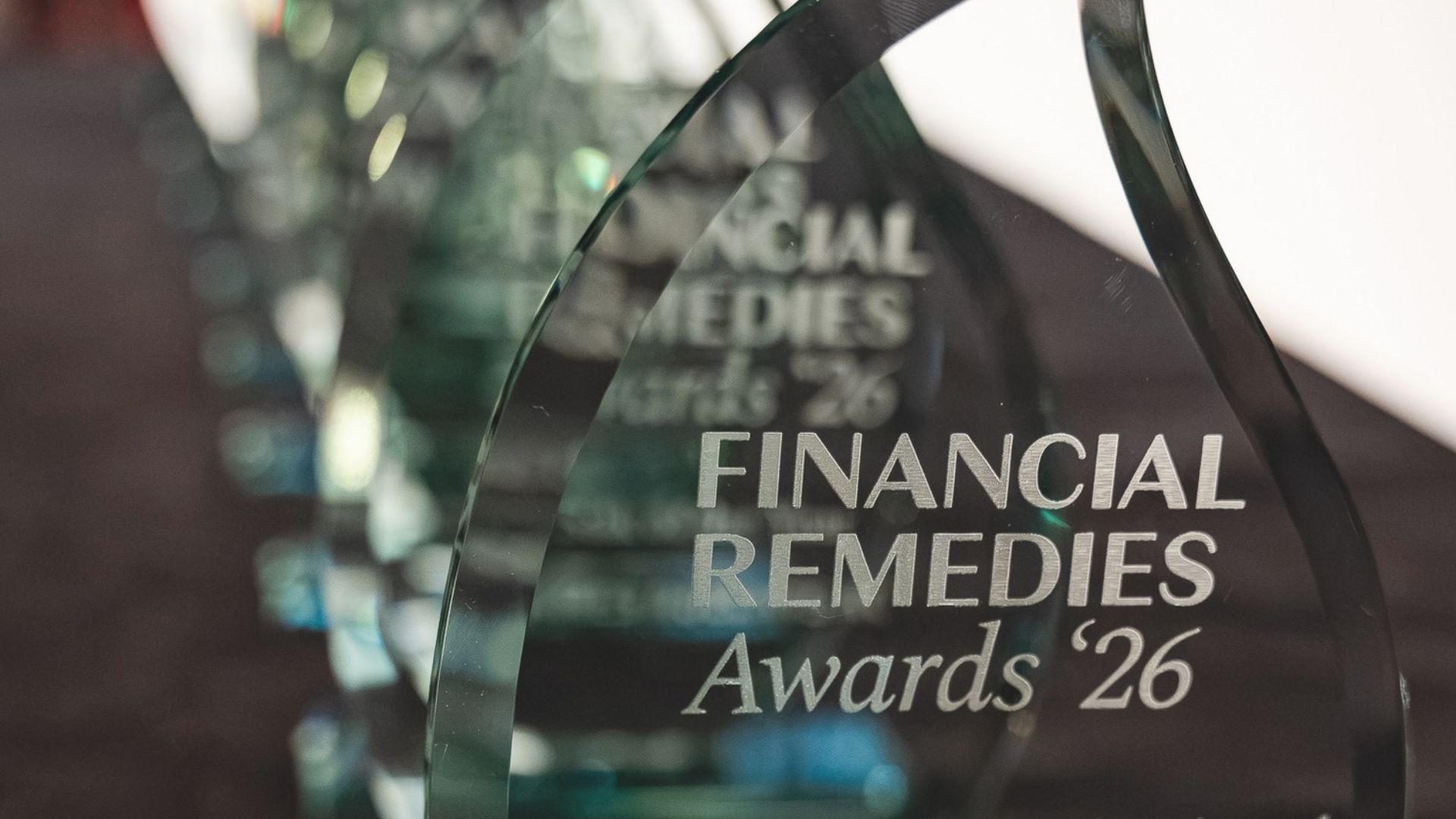
The day concluded with the FRJ Awards, an event that solidified the sense of community. It was a joy to see small enclaves cheer on their nominees and then clap exuberantly for the winner, whoever it was. I know the shortlists and winners are covered in more detail elsewhere, so I will not repeat them here.
The biggest takeaway of the day was not a legal one; it was a human one. Financial remedies practitioners, whether barristers, CILEX, paralegals, legal assistants, or solicitors, are part of one community, one that values its people as much as it values excellence.


Latest

The Financial Remedies Conference 2026
The Financial Remedies Awards 2026