
FRC Corner National Guidance Efficient Conduct Open in Statement on the efficient conduct of Financial Remedy Hearings Proceedings in the Financial Remedies Court below High Court Judge level STATEMENT-ON-THE-EFFICIENT-CONDUCT-OF-FINANCIAL-REMEDY-HEARINGS-PROCEEDING-IN-THE-FINANCIAL-REMEDIES-COURT-BELOW-HIGH-COURT-JUDGE-LEVELstatement-on-the-efficient-conduct-of-financial-remedy-hearings-proceeding-in-the-financial-remedies-court-below-high-court-judge-level.pdf429 KBdownload-circle Related AB v CD [2025] EWFC 253 (B) DJ Dodsworth’s short judgment gives a blueprint of how not to prepare a case for trial, and how not to make a relief from sanctions application. Tech Corner: Miris Reporting – Innovative Technology to Help Solicitors Prepare, Verify and Negotiate Client Housing Needs Introduction This article reviews how solicitors currently fulfil the filing requirements of the 2022 Statement on the Efficient Conduct of Financial Remedy Hearings in the Financial Remedies Court below High Court Judge Level (the Efficiency Statement). It documents the specific challenges of producing indicative borrowing capacity material, going on to Simon v Simon [2025] EWFC 89 Judgment date: 07 April 2025 Peel J. Cost judgment from Peel J in ‘highly unusual’ financial remedy proceedings, in which a litigation loan provider successfully applied to be joined and to set aside a consent order which prevented them recovering a loan to W. Issues The issue for the court Read the journal Financial Remedies Journal – 2026 Issue 2 | Summer Open in Related AB v CD [2025] EWFC 253 (B) DJ Dodsworth’s short judgment gives a blueprint of how not to prepare a case for trial, and how not to make a relief from sanctions application. Tech Corner: Miris Reporting – Innovative Technology to Help Solicitors Prepare, Verify and Negotiate Client Housing Needs Introduction This article reviews how solicitors currently fulfil the filing requirements of the 2022 Statement on the Efficient Conduct of Financial Remedy Hearings in the Financial Remedies Court below High Court Judge Level (the Efficiency Statement). It documents the specific challenges of producing indicative borrowing capacity material, going on to Simon v Simon [2025] EWFC 89 Judgment date: 07 April 2025 Peel J. Cost judgment from Peel J in ‘highly unusual’ financial remedy proceedings, in which a litigation loan provider successfully applied to be joined and to set aside a consent order which prevented them recovering a loan to W. Issues The issue for the court Latest The Astonishing Fate of Scott v Scott (1911-1913) Secrecy in family cases from the Court for Divorce and Matrimonial Causes (1858) to the Financial Remedies Court (2024) The Consequences of Late Service of an N260 for Summary Assessment of Costs: Prejudice and Proportionality The requirement to serve a statement of costs (Form N260) for the purposes of summary assessment of costs is set out in CPR PD 44 para 9.5. But what are the consequences of a breach of the rule to serve the statement of costs not less than 24 hours before the start of the hearing? Is It Time for the Conclusions in Waggott to Be Reconsidered? There is arguably a far greater understanding now than there was even as recently as 2018 of domestic abuse and the wide-reaching and long-lasting impact that it can have. Does this mean it is time for the Court of Appeal to reconsider the conclusions it reached in Waggott? is curated by The Leaders In Family Law Books & Software EXPLORE OUR PRODUCTS
AB v CD [2025] EWFC 253 (B) DJ Dodsworth’s short judgment gives a blueprint of how not to prepare a case for trial, and how not to make a relief from sanctions application.
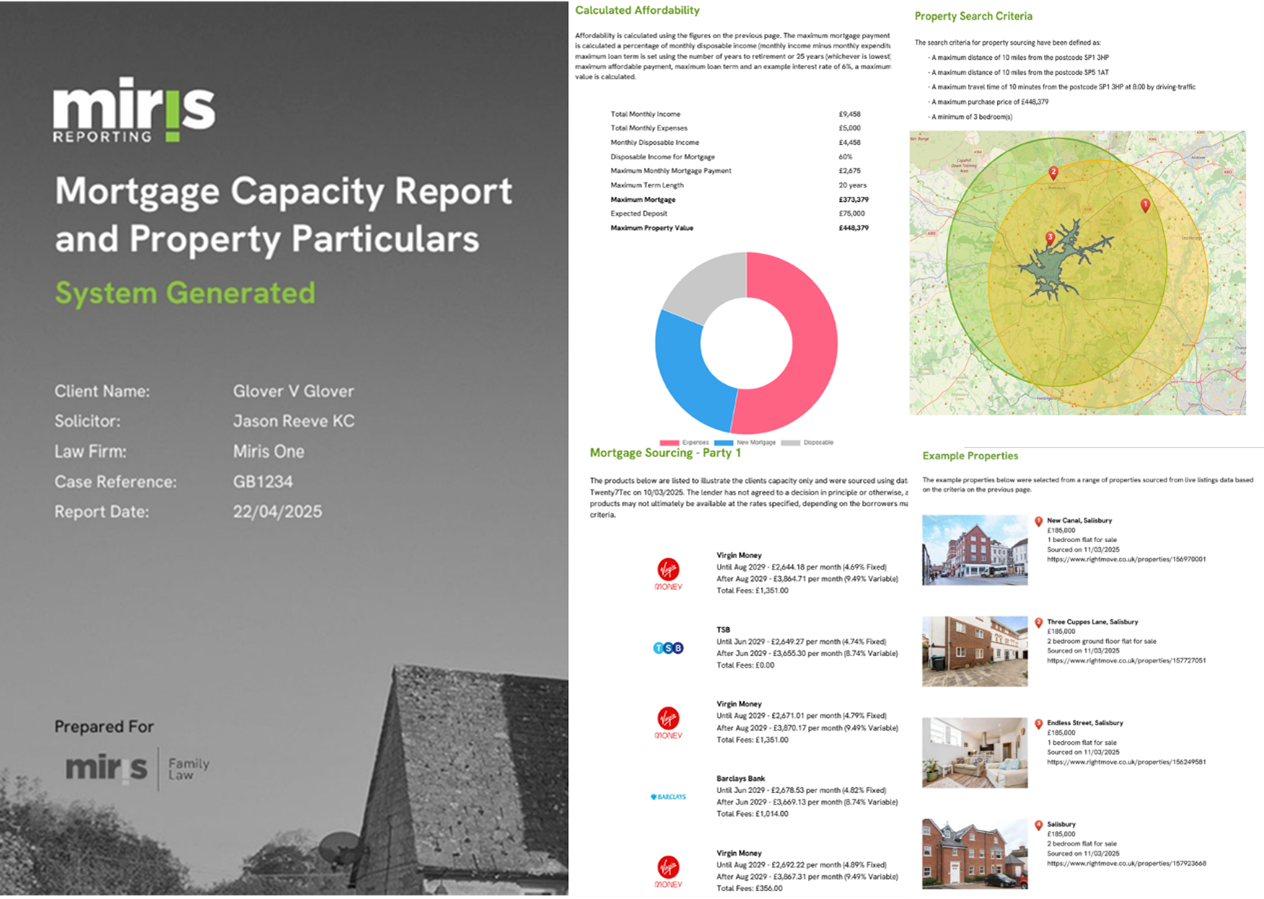
Tech Corner: Miris Reporting – Innovative Technology to Help Solicitors Prepare, Verify and Negotiate Client Housing Needs Introduction This article reviews how solicitors currently fulfil the filing requirements of the 2022 Statement on the Efficient Conduct of Financial Remedy Hearings in the Financial Remedies Court below High Court Judge Level (the Efficiency Statement). It documents the specific challenges of producing indicative borrowing capacity material, going on to
Simon v Simon [2025] EWFC 89 Judgment date: 07 April 2025 Peel J. Cost judgment from Peel J in ‘highly unusual’ financial remedy proceedings, in which a litigation loan provider successfully applied to be joined and to set aside a consent order which prevented them recovering a loan to W. Issues The issue for the court
AB v CD [2025] EWFC 253 (B) DJ Dodsworth’s short judgment gives a blueprint of how not to prepare a case for trial, and how not to make a relief from sanctions application.
Tech Corner: Miris Reporting – Innovative Technology to Help Solicitors Prepare, Verify and Negotiate Client Housing Needs Introduction This article reviews how solicitors currently fulfil the filing requirements of the 2022 Statement on the Efficient Conduct of Financial Remedy Hearings in the Financial Remedies Court below High Court Judge Level (the Efficiency Statement). It documents the specific challenges of producing indicative borrowing capacity material, going on to
Simon v Simon [2025] EWFC 89 Judgment date: 07 April 2025 Peel J. Cost judgment from Peel J in ‘highly unusual’ financial remedy proceedings, in which a litigation loan provider successfully applied to be joined and to set aside a consent order which prevented them recovering a loan to W. Issues The issue for the court
The Astonishing Fate of Scott v Scott (1911-1913) Secrecy in family cases from the Court for Divorce and Matrimonial Causes (1858) to the Financial Remedies Court (2024)

The Consequences of Late Service of an N260 for Summary Assessment of Costs: Prejudice and Proportionality The requirement to serve a statement of costs (Form N260) for the purposes of summary assessment of costs is set out in CPR PD 44 para 9.5. But what are the consequences of a breach of the rule to serve the statement of costs not less than 24 hours before the start of the hearing?

Is It Time for the Conclusions in Waggott to Be Reconsidered? There is arguably a far greater understanding now than there was even as recently as 2018 of domestic abuse and the wide-reaching and long-lasting impact that it can have. Does this mean it is time for the Court of Appeal to reconsider the conclusions it reached in Waggott?