
L v L [2011] EWHC 2207 (Fam)
Judgment date: 15 August 2011
Related

Finality and Funding: The Implications of a Clean Break following CC v UU
The judgment of Peel J in CC v UU [2025] EWFC 214 provides a further glimpse of the LSPO regime, and seeks to establish definitively when the opportunity to seek an LSPO ceases.

Wells Sharing: Commonplace or a Matter of Last Resort?
The importance of the ‘clean break’ has been reemphasised in recent years with greater emphasis being placed on MCA 1973 s 25A (and s 28(1A)), particularly in the judgments of Mostyn J. For example, in Quan v Bray & Ors [2019] 1 FLR 1114, having referred at [48] to
D v D (Financial Remedy Case) [2020] EWFC B24
Judgment date: 20 May 2022
https://www.bailii.org/ew/cases/EWFC/OJ/2020/B24.html
DJ John Smart.
Rare reported modest asset case. Identification of needs in a marriage that, with prior cohab, had lasted only 10 months. Parties aged 51 and 49. Modest assets, almost all brought into


Related
Finality and Funding: The Implications of a Clean Break following CC v UU
The judgment of Peel J in CC v UU [2025] EWFC 214 provides a further glimpse of the LSPO regime, and seeks to establish definitively when the opportunity to seek an LSPO ceases.
Wells Sharing: Commonplace or a Matter of Last Resort?
The importance of the ‘clean break’ has been reemphasised in recent years with greater emphasis being placed on MCA 1973 s 25A (and s 28(1A)), particularly in the judgments of Mostyn J. For example, in Quan v Bray & Ors [2019] 1 FLR 1114, having referred at [48] to
D v D (Financial Remedy Case) [2020] EWFC B24
Judgment date: 20 May 2022
https://www.bailii.org/ew/cases/EWFC/OJ/2020/B24.html
DJ John Smart.
Rare reported modest asset case. Identification of needs in a marriage that, with prior cohab, had lasted only 10 months. Parties aged 51 and 49. Modest assets, almost all brought into
Latest

The Reluctant Pension Credit Member
[2026] 1 FRJ 39. In the case of AP v TP [2025] EWFC 190 (B) a financial remedy order was made by consent, following an FDR, which included a pension sharing order in W’s favour. Difficulties began when W failed to provide the necessary information to permit the pension share to be implemented.

Housing Particulars: Mind The Gap
What can the court do when there's a significant gap between the bottom of the applicant’s range and the top of the respondent’s range? Can the court take up the invitation made by counsel to ‘conduct its own research on Rightmove if it wishes’?
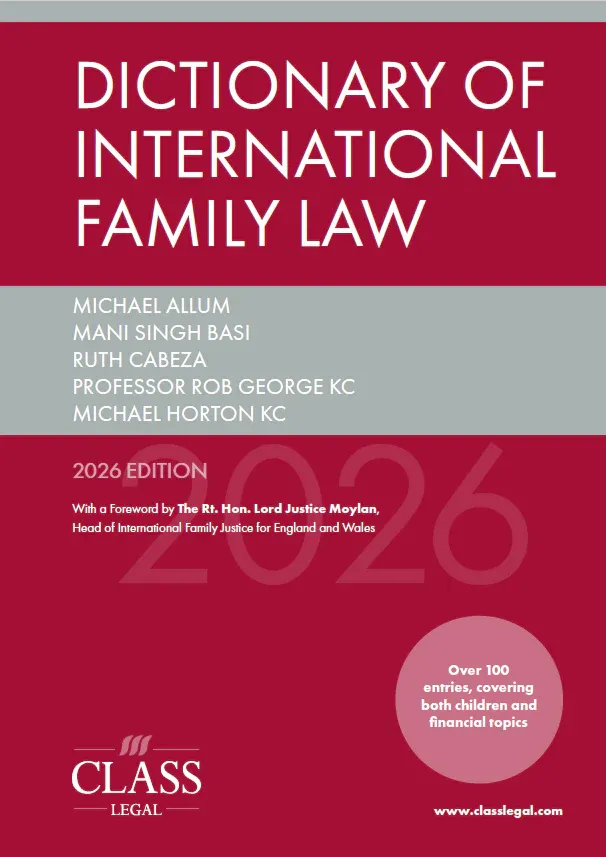
Book Review: Dictionary of International Family Law
The Dictionary of International Family Law is the latest addition to the series of Class Legal Dictionaries. It joins this distinguished family with confidence and purpose.