
Private FDRs Under the Spotlight
Are private FDRs working? And does the answer depend upon who is answering? Those were the core questions discussed at a gathering of family lawyers – both neutral evaluators and advisers – in central London on 9 June 2026.
Are private FDRs working? And does the answer depend upon who is answering? Those were the core questions discussed at a gathering of family lawyers – both neutral evaluators and advisers – in central London on 9 June 2026.
Lawyers’ viewpoint – our survey
The genesis of the discussion was a survey of family lawyers which we ran earlier this year, in turn following a ‘state of the nation’ discussion in our mediation group about pFDRs. Generating 329 responses, the main topics covered were the prevalence of pFDRs; whether the process needed fine-tuning; interaction of pFDRs with other NCDR models like mediation; and views about the client experience.
Who answered the survey and how many pFDRs are they doing?
Which best describes your principal role in pFDRs?
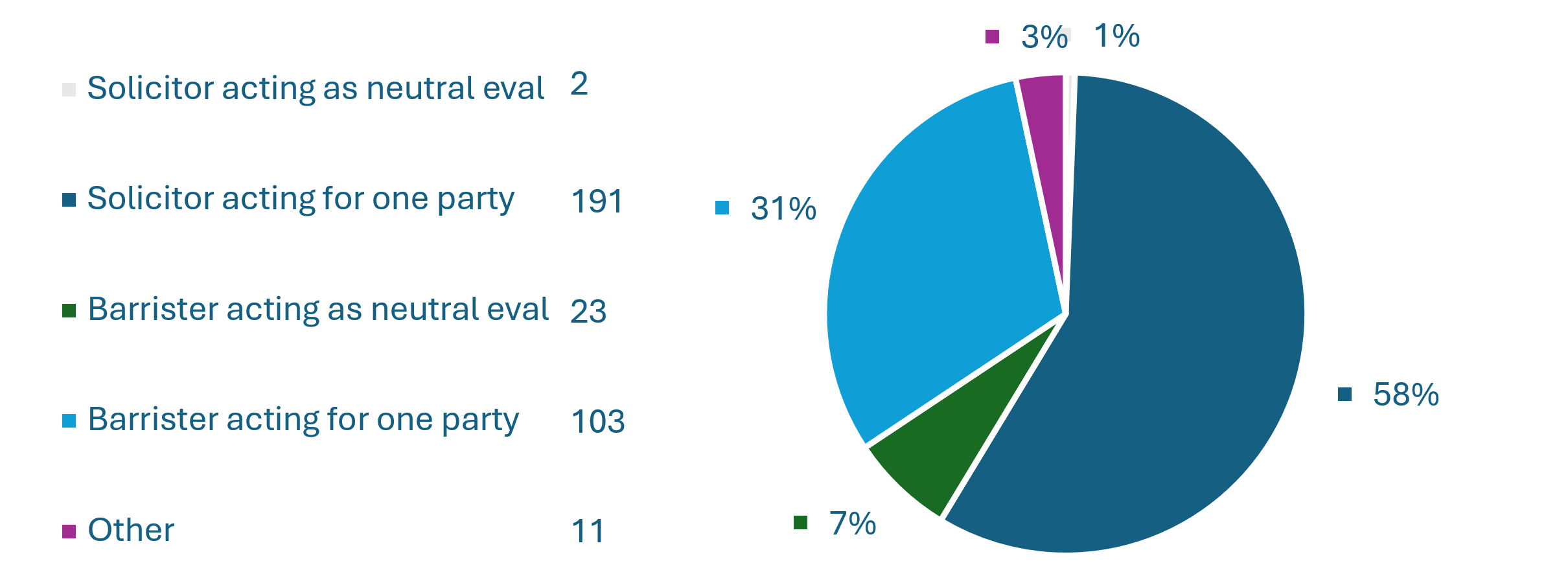
We asked respondents their principal role in pFDRs. Almost 3/5 were solicitors (mainly those acting for one party) and almost 2/5 counsel, with a small rump of other responders being mediators, an ISW and paralegals. Whilst 25/329 described themselves as mainly acting as neutral evaluator, the vast majority mainly acted as adviser to one party.
Which (other) NCDR disciplines do you practise (tick all that apply) (note caveat)?
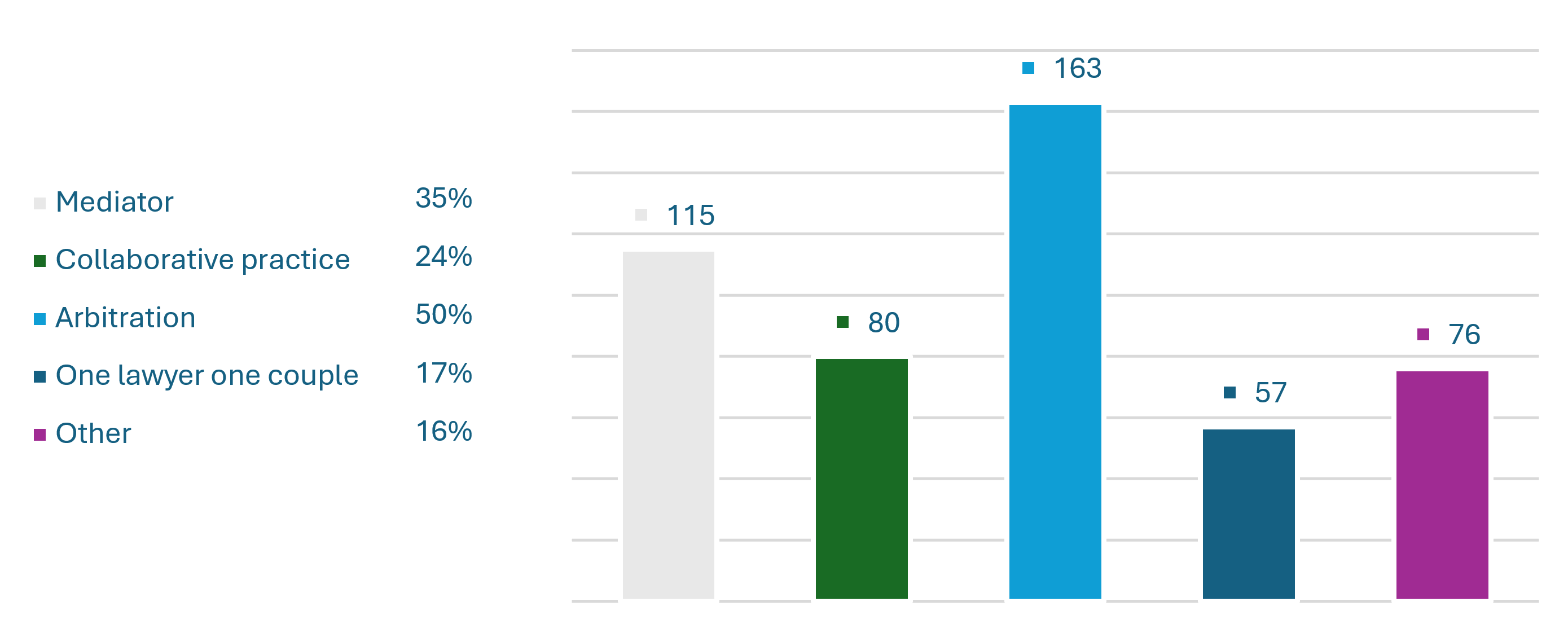
We asked respondents what other NCDR disciplines they practise [a caveat – it is apparent that many interpreted ‘practise’ as ‘use’ rather than ‘qualified in’]. Half of respondents said arbitration, then mediation (35%), collaborative practice (24%) and one lawyer one couple (17%). Others cited using or encouraging processes like conducting roundtable meetings and negotiation; a handful were parenting co-ordinators.
How many pFDRs have you participated in during the last 12 months (as evaluator or adviser)?
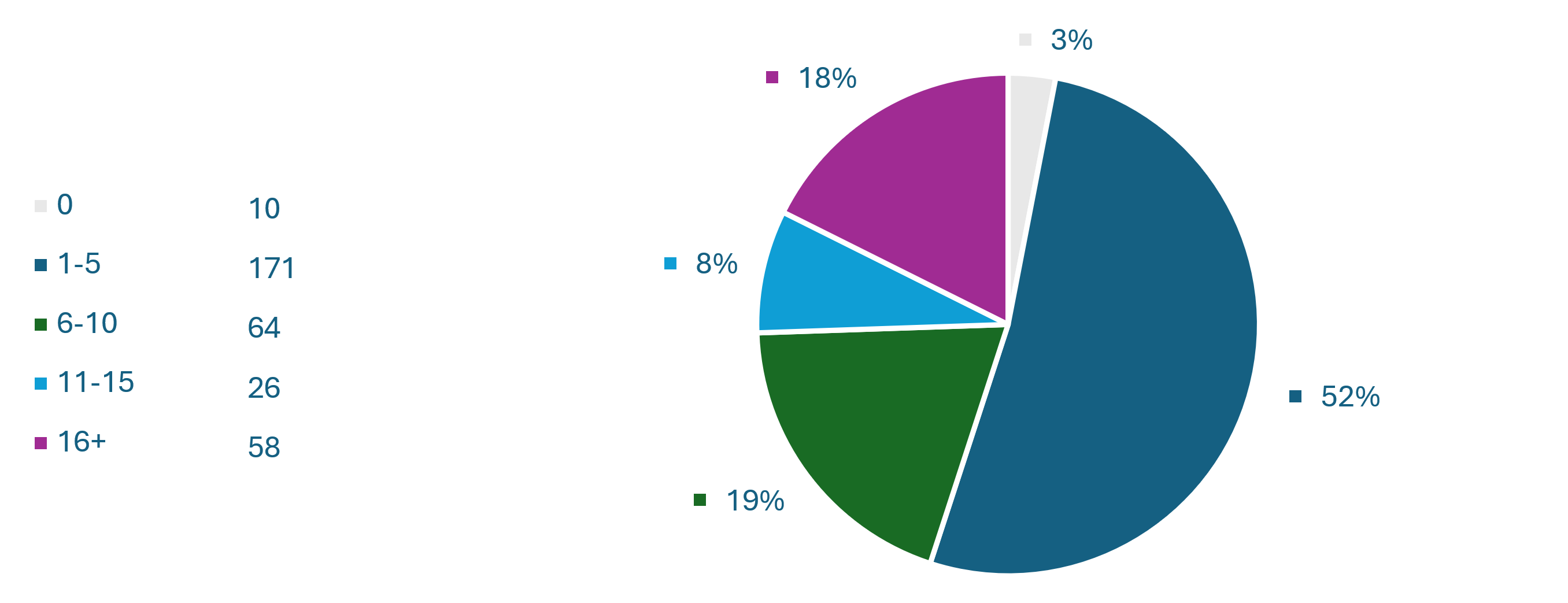
We asked respondents how many pFDRs they had participated in in the last 12 months. The majority (52%) said 1–5. 10/329 people said none; just under 1 in 5 had participated in 16 or more.
What were lawyers’ thoughts about how the process is working?
First, we asked about the pre-pFDR space.
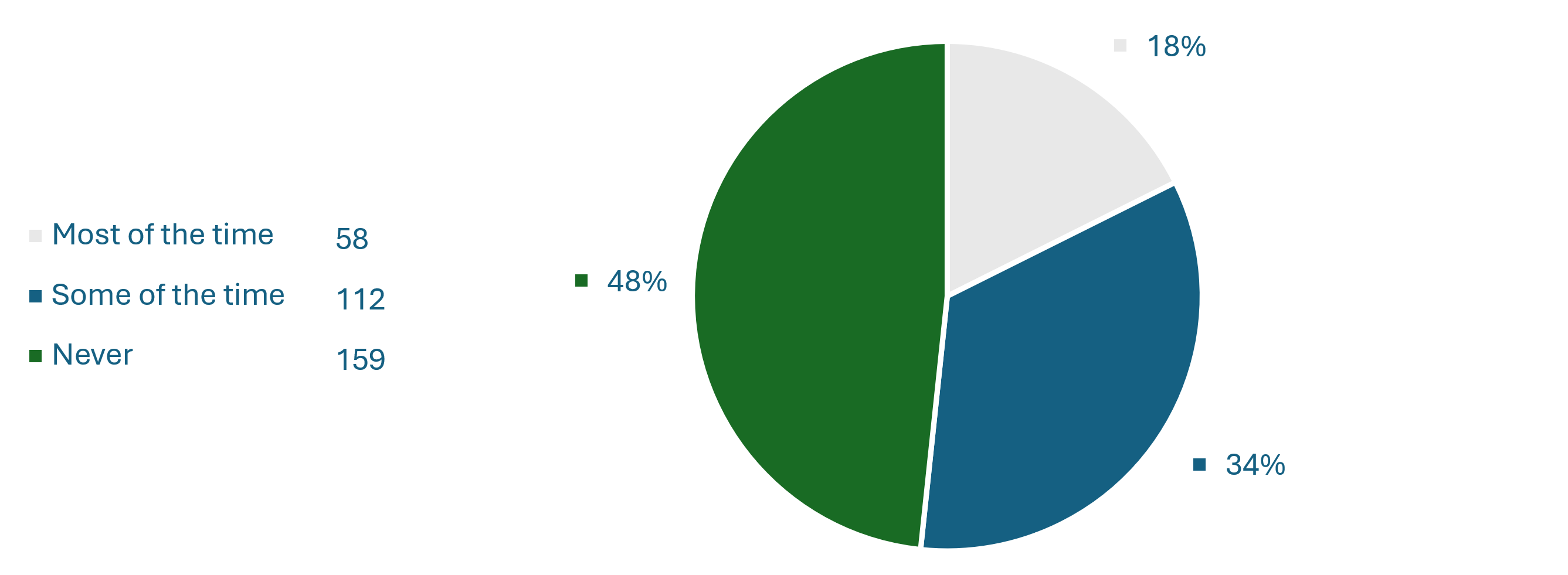
The sharing of documents/terms of business beforehand by the pFDR evaluator was still the exception – half of respondents (whether mainly advisers or neutral evaluators) said they/the pFDR evaluators they use don’t share documents beforehand, half said they do (but only 18% of respondents said that that was their habit/experience most of the time)
Aside from terms of engagement, how often do you (if predominantly a pFDR evaluator)/the pFDR evaluators you work with (if predominantly an adviser) share documents in advance explaining how you/they work and what the clients’ expectations of process should be?
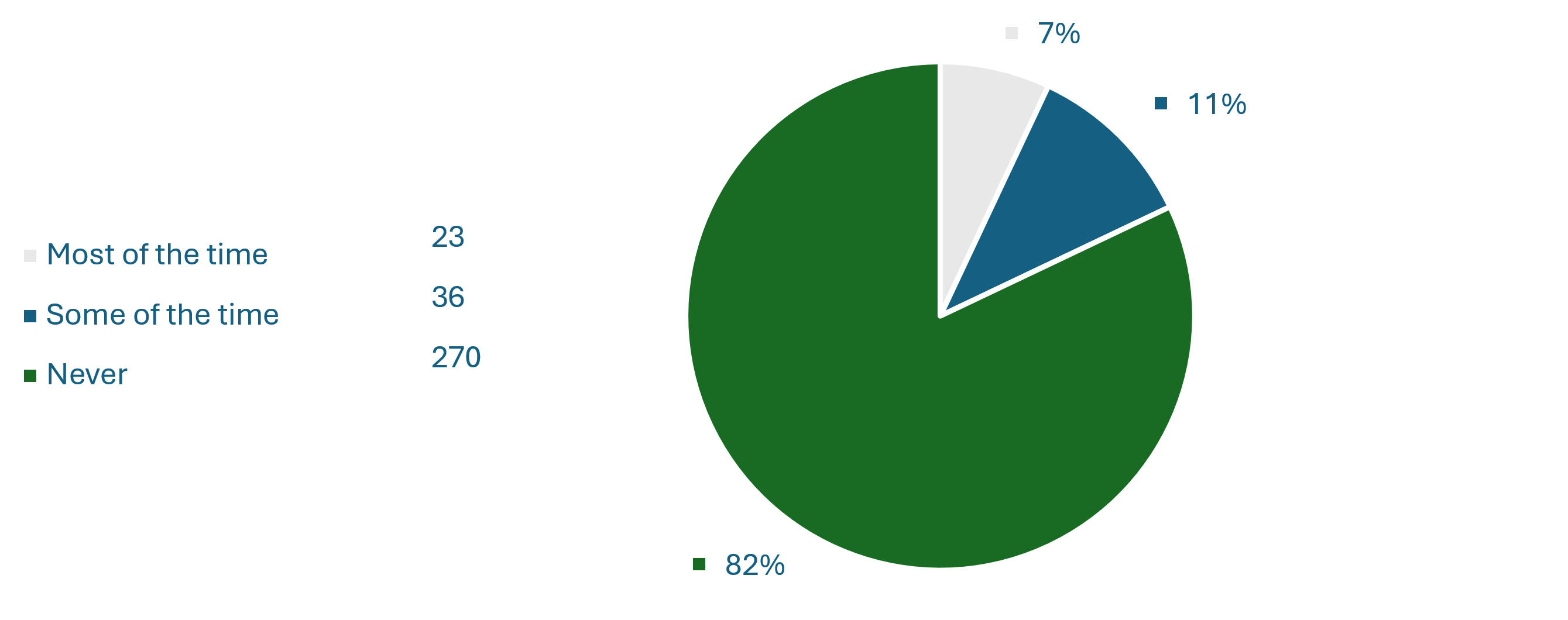
Pre-meetings ahead of the pFDR are rare, 82% saying they never do/experience that.
How often do you (as a pFDR evaluator) or the pFDR evaluators you work with (as an advisor) have a pre-meeting before the day of the pFDR?
We asked how helpful clients may find a document or pre-meeting. Some thought a document could be helpful, perhaps a short factual explainer which could address e.g. timings on the day and issues to be addressed, 1–2 weeks beforehand, as long as it maintained pFDR evaluator neutrality; generally, a pre-meeting wasn’t favoured. 40% questioned whether such additional steps would add value and 34% cited concerns about additional costs.
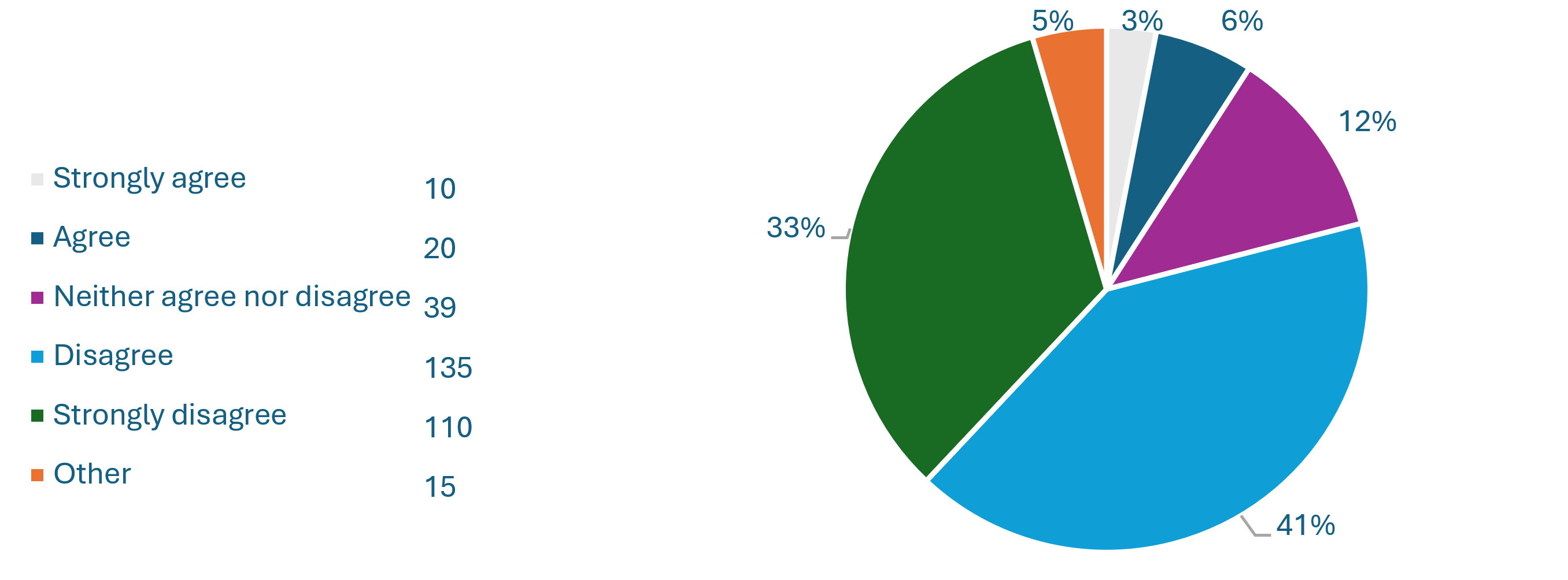
We wanted to gauge whether requiring proposals beforehand can polarise positions and hinder settlement. Fewer than 10% agreed that was the case; 75% disagreed or strongly disagreed. It was felt that it would undermine the entire process to remove proposals, as they focus minds, allow evaluators to prepare, emotionally prepare clients and avoid ambush on the day.
Do you agree that requiring proposals before the pFDR encourages polarised positions and can hinder settlement?
We also asked about people’s experience on the day of the pFDR.
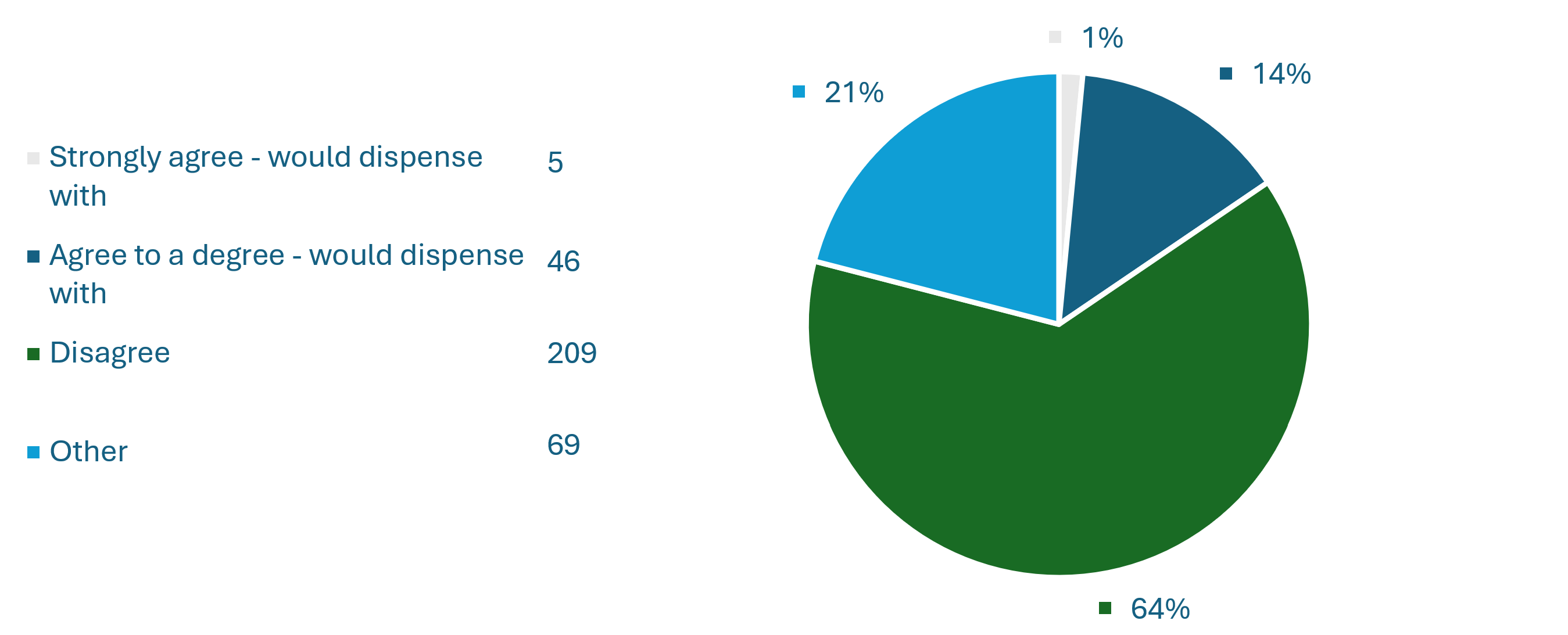
There was favour for retaining position statements and oral submissions, with only 15% agreeing to some degree that they should be dispensed with. Most respondents want written position statements retained (but many mentioned the need for them to be less adversarial – tone is the issue); and there was appetite for time-limiting oral submissions (67% cited this) but not abolishing them. The broad rationale was that clients need to feel their case is being properly advanced, to buy into the indication.
To what extent do you agree that position statements/oral submissions tend to encourage polarised positions and discourage settlement, and as such would you dispense with them?
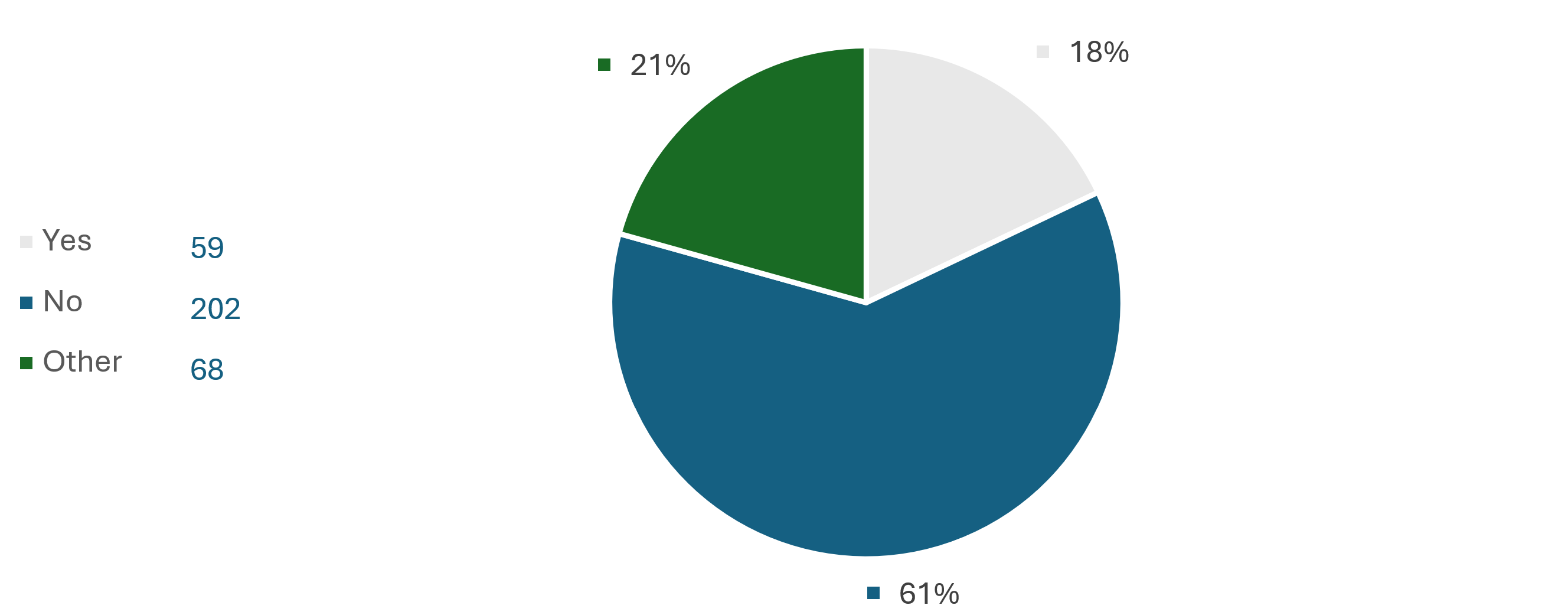
Our mediation group had a bit of a debate about whether precision in indication serves to make settlement more difficult. The strong sense in the survey responses was that it depends on the case but that generally (61%), the more precise the better. Broad indications hinder settlement as clients gravitate towards opposite ends of the indication (per 54% of respondents), but 33% said too precise an indication can entrench positions as it risks creating a ‘winner’ who is unprepared to move.
In your view, is there a risk that, the more precise the pFDR indication, the less likelihood there is of settlement being reached at/shortly after the pFDR?
Finally, in terms of the role of the pFDR evaluator on the day, the majority experience (84%) was that once an indication is given, a evaluator takes a back seat, to differing degrees. Yet around half would welcome evaluators being more interventionist on the day. Within the themes included under those who answered neither yes nor no to whether pFDR evaluators should intervene more, it was caveated that judicial intervention would be helpful where the parties are close to settlement and/or clarification is needed. However, it would be rejected if it risked compromising neutrality or turning evaluators into mediators.
Is it your experience that once the pFDR evaluator has given an indication (or if a pFDR evaluator yourself, once you have given an indication), they/you generally take a back seat on the day?
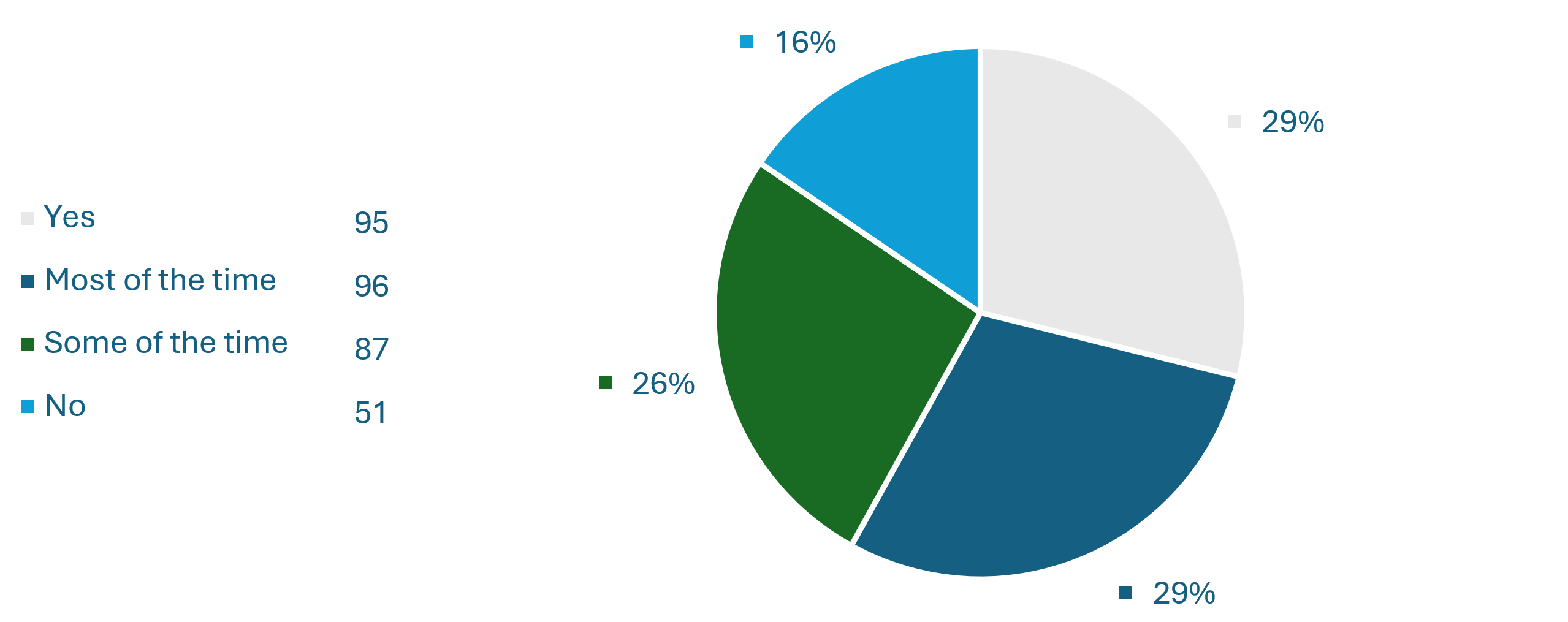
What if any role is there for pFDR evaluators to be more interventionist after the indication?
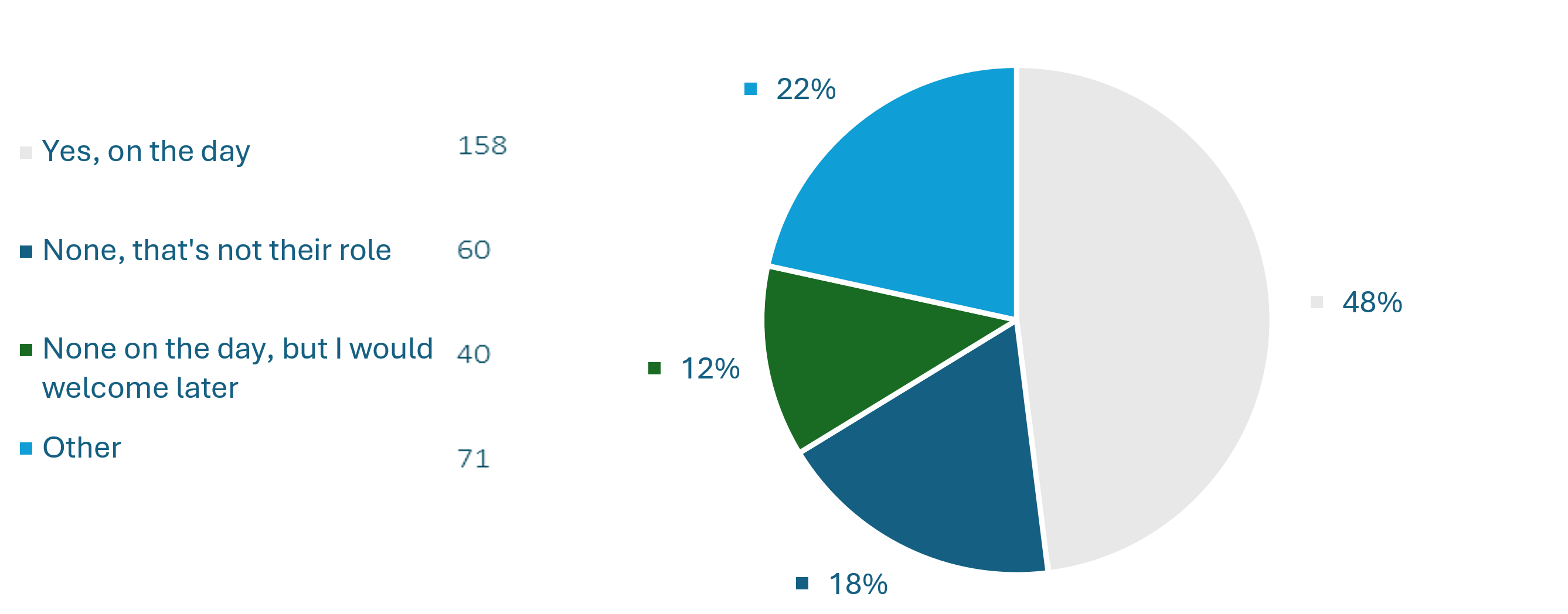
May pFDRs be improved if combined with other NCDR processes?
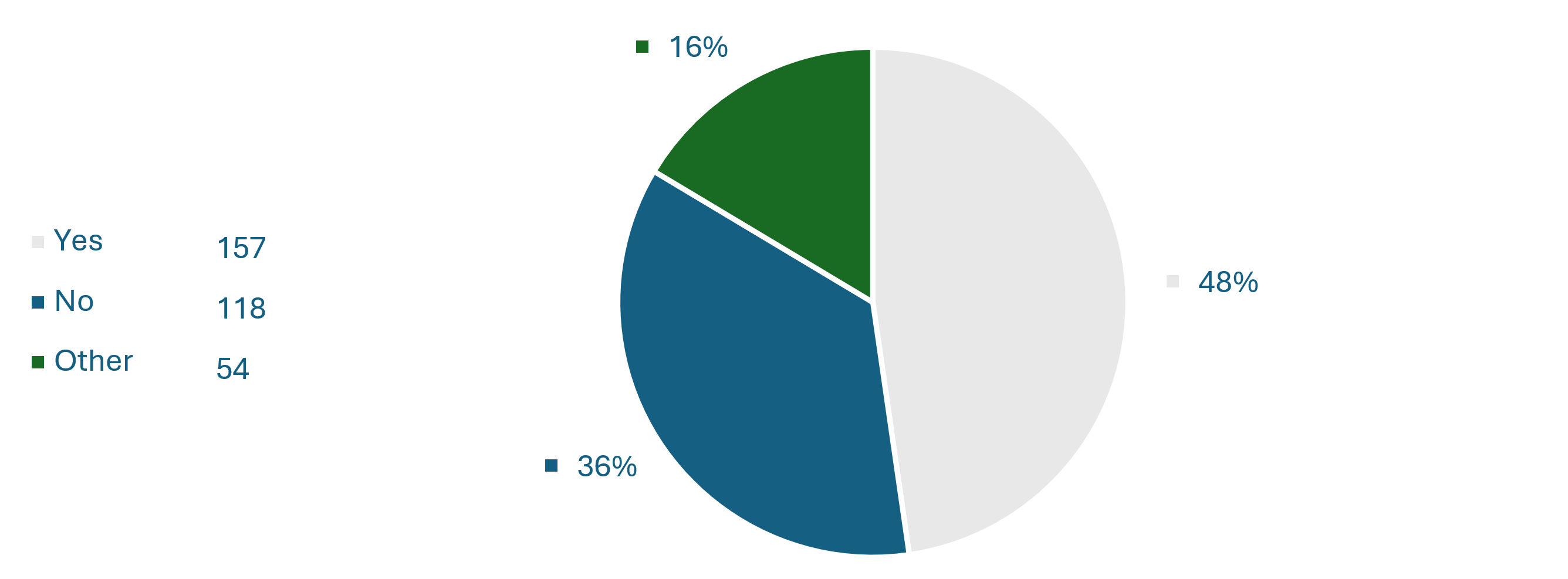
People were asked thoughts about involving a mediator in a pFDR, something that is happening in some regions (e.g. Manchester). About one-half of respondents were receptive to the idea and around one-third not. Those who answered ‘other’ said they would welcome mediation within the pFDR in very limited or exceptional cases, the main concerns cited being cost and role confusion.
Would you be willing to consider recommending involving a mediator in a pFDR?
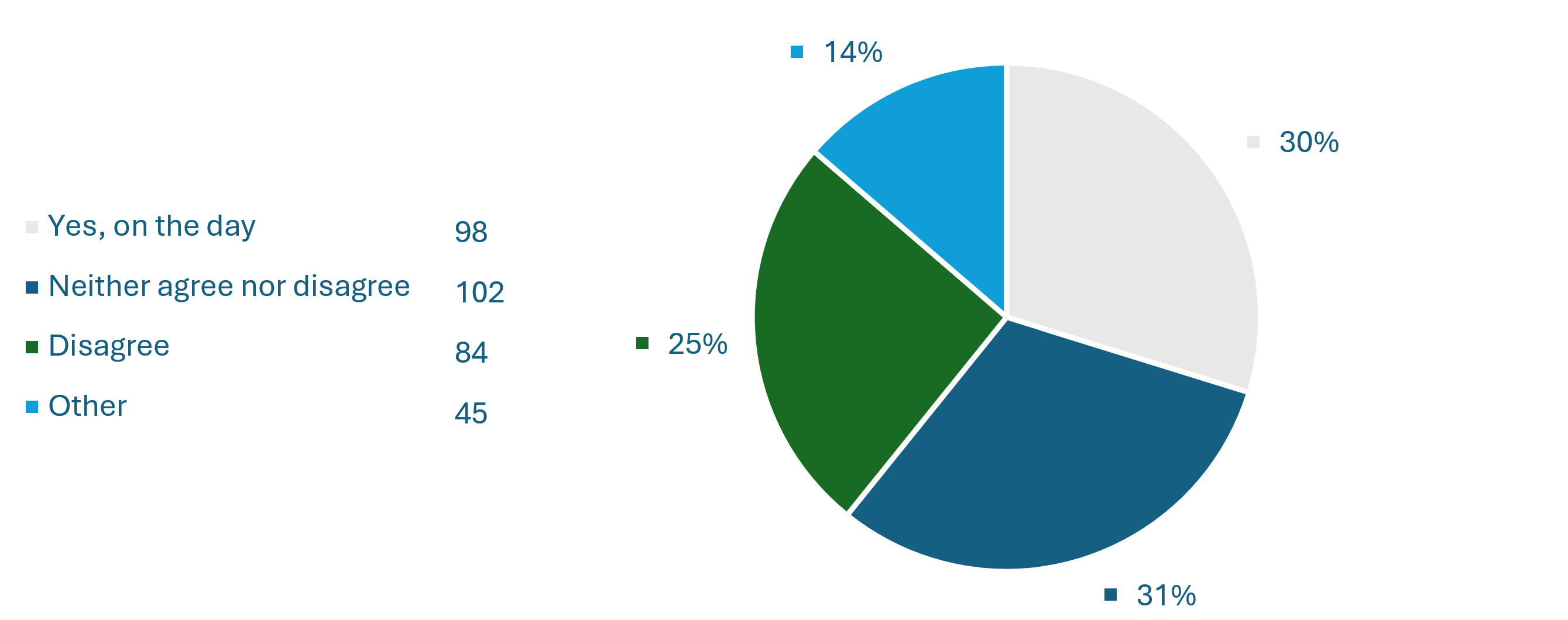
People were slightly more agnostic about settlement prospects being improved by a mediator being at a pFDR – around one-third neither agreed nor disagreed, a similar number agreed they could help in that way, but one-quarter disagreed. Some felt that, if mediation was appropriate, it would likely have happened earlier. There was also the sense that those in the room could negotiate effectively (although, with my mediator hat on, I would say that pFDR negotiations tend to be positional, whereas a mediator’s intervention may be more outcomes-focused).
To what extent do you agree that pFDRs supported by a mediator may improve settlement prospects at/shortly after the pFDR?
Do lawyers think pFDRs are working for clients?
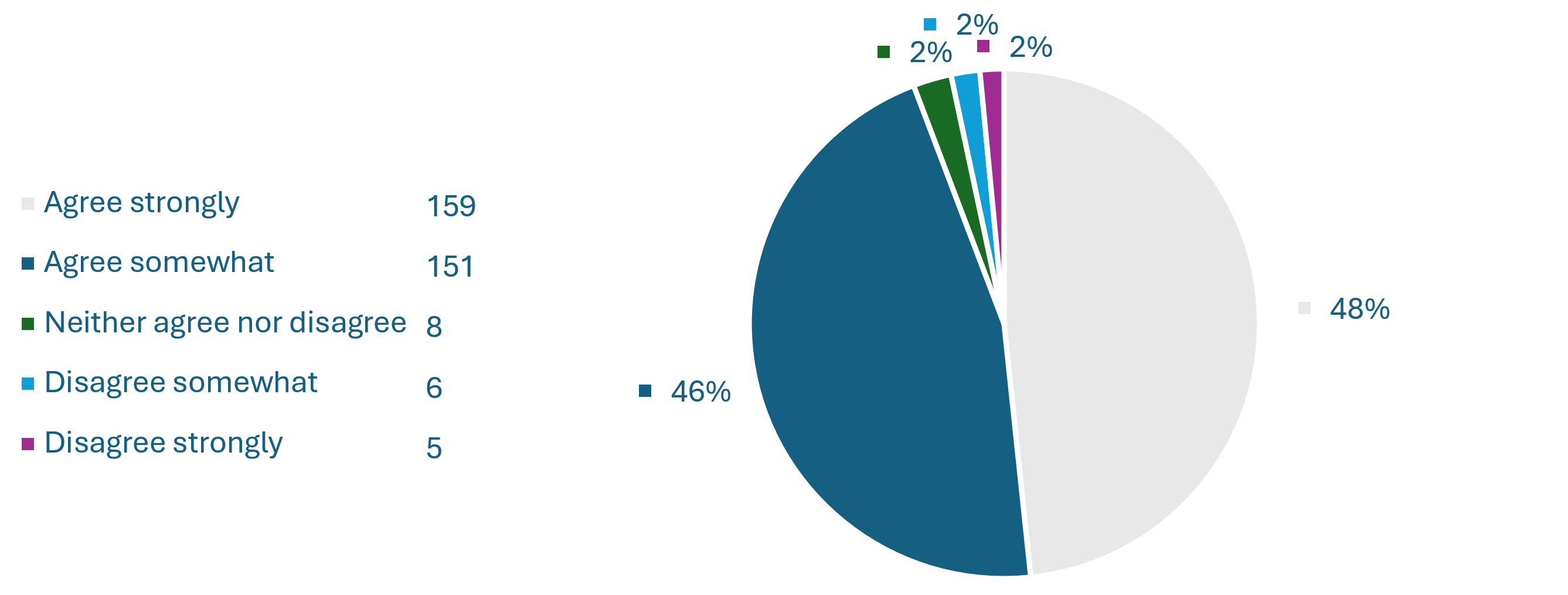
We asked respondents whether people agreed that pFDRs are giving clients what they need to resolve swiftly financial claims on divorce. 94% said yes, split quite evenly between those who agreed strongly (48%) and those who agreed somewhat (46%). For those who agreed strongly, the most common theme was speed, efficiency and reduced delay. 77% cited higher settlement rates/better outcomes, 62%, the quality of the evaluator, 38%, a better environment and experience for clients. For those who agreed somewhat, concerns included most commonly, inconsistency in evaluators quality or approach (36%); the need for indications being provided earlier in the day (31%) and, in tandem with this, the need for better timetabling/curbing lengthy submissions (29%).
The 6% who disagreed that pFDRs are giving clients what they want had some other messages worthy of consideration – worry that they have become more like mini-final hearings than settlement meetings, with people using them to ‘dry run’ and finesse trial arguments; it doesn’t encourage clients to own the outcome; lawyers are not incentivised to settle cases and it is an expensive way to avoid the need to give realistic advice and negotiate sooner.
Do you agree that pFDRs are giving clients what they need, to resolve swiftly financial claims on divorce?
Discussion forum on 9 June
We invited a group of around 50 counsel, solicitors, mediations and family consultants to reflect on the survey results and discuss how the pFDR process may continue to evolve. Whilst there was overwhelming support for pFDRs as an effective means of resolving financial remedy disputes, there was also clear recognition that the client experience requires greater focus.
Clients’ actual views about pFDRs?
Family consultants present spoke powerfully about the emotional impact of the process on clients. Preparation of clients is key. Many arrive at a pFDR without properly understanding what to expect and can feel overwhelmed by the pace, pressure and volume of information they are required to process in a single day. Contributors emphasised the importance of repeating advice in advance, avoiding assumptions that clients have understood explanations first time round and providing written material that they can refer to. There was also support for creating a standard information document for clients explaining the pFDR process, a glossary of things like what an ES1 and ES2 are, and what they should expect on the day, to be tailored to the individual case and shared a number of weeks before the hearing itself (ideally from the pFDR evaluator, so that both parties are receiving the same information).
A common theme from the family consultants was a sense of client anxiety and unpreparedness being exacerbated by breach of agreed/court-imposed directions being almost the accepted norm. (Is there a sense that because we are in a private process, there is less place to complain about this?) Greater control of this (by the solicitors? pFDR evaluator? Or an arbitrator signed up from the outset?) was favoured.
On the day itself, better timetabling and an earlier indication, a kinder/less adversarial process, more breaks, more pausing to explain, better emotional support, were all cited as being needed. Many clients don’t sleep the night before, won’t have been to the pFDR venue before, won’t have met or heard from the pFDR evaluator before, and this all adds to stress levels. Many also express buyers’ remorse, asking their family consultant afterwards ‘am I bound by what I agreed?’ We need to change that.
Slippage of the agreed timetable
An overarching theme was increasing acceptance of court timetables slipping and becoming compressed in the lead-up to a pFDR; we are ‘slipping into bad ways’. Family consultants spoke about the significant impact this can have on clients, particularly where disclosure, negotiations and preparation are all condensed into a short timeframe. They encouraged practitioners, where possible, to build in more generous intervals between timetabled directions in order to give clients sufficient opportunity to absorb advice, reflect on proposals and properly process the information being provided to them before attending a pFDR. It was agreed that it should be logical to agree a long lead-in time of directions to minimise the impact of slippage.
A ‘mock trial’
A number of contributors shared concern that pFDRs can sometimes begin to resemble ‘mini final hearings’, with increasingly polarised offers, lengthy submissions and insufficient negotiation beforehand. It was noted that the process was never intended to be a privileged mock trial, but rather a genuine settlement forum focused on identifying the issues that truly matter and narrowing/closing them. Some questioned whether there should be greater use of arbitration for discrete disputes, rather than directing every case towards a traditional pFDR structure. An FDR used to be there for those cases which weren’t capable of sooner settlement for one reason or another; now it is often the first time any negotiation will take place.
The role of the pFDR evaluator on the day
There was some divergence of views about how directive the evaluator can be about the timetabling and running of the day. Many felt that this was for the legal teams to agree; one has to ‘run the day by consent’. Others felt that it was within their remit to timetable carefully (though still reticence to impose time limits on the length of oral submissions) and to require parties to report back periodically during the day as to how discussions were going, as one would expect at court.
Audience views about improving the client experience:
Evaluators reflected on ways to make the process feel more accessible and less intimidating for clients, noting that there is currently no formal training for pFDR evaluators. Some embraced the idea of short meetings with clients ahead of the hearing itself, enabling parties to meet the evaluator in advance and better understand the structure of the day, albeit with caution about impact on costs. Evaluators also agreed the importance of carefully explaining the purpose and intention of the pFDR at the outset of the hearing in order to humanise the process and reduce anxiety for clients. Many welcomed the suggestion that at the end of the hearing if no settlement is reached, evaluators should signpost parties to other forms of NCDR.
Those present were asked to mood map, in one word, what clients have reported feeling about their pFDR experience. Some reported positive feelings – relief, liberating, positive. But many were less positive – stressful, exhausting, traumatic, expensive, rushed, litigious.
Safeguarding
There was broad agreement that clearer guidance is needed around identifying and managing vulnerability, coercive dynamics and client safety within pFDRs, given that they can sometimes be weaponised in coercive relationships. Contributors noted that, whilst mediation has well-established screening processes, there remain few formal safeguards or consistent procedures within the pFDR model itself. There is currently underway an initiative between a number of family law organisations including Resolution and the FLBA to devise a best practice guide for screening, and safety on the day of a pFDR, where all are represented. This will include guidance about where safeguarding screening responsibilities lie and proper standards.
An integrated model of mediation within a pFDR
The role of mediation alongside pFDRs was also explored in discussion, including discussion of hybrid models combining neutral evaluation with lawyer-assisted mediation (one view being that a neutral evaluator could move into mediation mode where trained to do so). Whilst views differed as to cost and practicality, there was consensus that the profession should continue exploring flexible approaches which better support clients and improve the prospects of constructive settlement.
Ultimately, the discussion reinforced that pFDRs remain an enormously valuable process, one which lawyers favour and which continues to evolve. A permeating theme was the importance of ensuring that clients feel informed, safe and able meaningfully to engage in negotiations, rather than simply being pushed through an intense and pressured process. Better preparation and timetabling were thought to be key.
What next?
There was some discussion around who will drive any change. Some evaluators present said, pFDR evaluators will do what they are told and it is for the advisers to drive change. Change is most likely to take root, however, if all involved in the process contribute, agree and embrace it; and most important will be to hear from the ultimate consumer, the lay client.
We intend to take the discussion back to our mediation group, to continue this important conversation with evaluators, family consultants, solicitors and counsel to share their experiences and reflect further upon the key themes emerging from the survey and the broader discussion. We will look forward to the important safeguarding work progressing and ensure that we connect with organisations reflecting on standards in neutral evaluation. We also intend to widen the discussion to neutral children evaluation in the autumn and have reached out to some specialists already. Of course, we welcome contributions from anyone reading this article.
Our hope is that, through ongoing discussion and collaboration across the profession, meaningful improvements can continue to be made to the client experience and, ultimately, to the effectiveness and success of pFDRs for the families using them.
With thanks to Sarah Anticoni, Jemimah Fleet and Joanna Yiannitsarou of Charles Russell Speechly for hosting the event on 9 June; and to Sarah, Emma Harte, Charlotte Bradley, Peter Burgess and James Pirrie for helping Jo to pull together the survey and collaborating on this initiative.
Related

As NCDR Rule Changes Reach Toddlerhood, Are They Hitting Their Milestones?

The ‘Manchester Model’; Combining ENE/pFDRs and LAM (Lawyer Assisted Mediation). The Most Effective NCDR in Financial Remedy Cases?
From Barrister to Neutral – Building a Practice in Non-Court Dispute Resolution


Related
As NCDR Rule Changes Reach Toddlerhood, Are They Hitting Their Milestones?
The ‘Manchester Model’; Combining ENE/pFDRs and LAM (Lawyer Assisted Mediation). The Most Effective NCDR in Financial Remedy Cases?
From Barrister to Neutral – Building a Practice in Non-Court Dispute Resolution
Latest

The Astonishing Fate of Scott v Scott (1911-1913)

The Consequences of Late Service of an N260 for Summary Assessment of Costs: Prejudice and Proportionality