
Managing Conduct Allegations: When Two Late Letters, £16m and a Retrial Collide – Court of Appeal Guidance on Conduct and Non-Disclosure Allegations
In Meerna Ali Ghuloom Faraj v Sohail Sultan Ahmad & Anor [2026] EWCA Civ 962, the Court of Appeal allowed both spouses’ appeals and the bank’s appeal, concluding that the trial judge’s factual findings could not stand and ordering a retrial.
Meerna Ali Ghuloom Faraj v Sohail Sultan Ahmad & Anor [2026] EWCA Civ 962
Factual snapshot
The Court of Appeal allowed both spouses’ appeals and the bank’s appeal, concluding that the trial judge’s factual findings could not stand and ordering a retrial. The case concerned a high value, acrimonious financial remedy dispute arising from a marriage that began in Bahrain and ended in England. Central contested issues included inter alia (i) whether the husband had access to about £16m; and (ii) whether an agreement to purchase a property at a later date was a sham. The judge at first instance had ordered the husband to pay the wife a lump sum of about £6m and made provisional orders about the wife’s short term housing via the bank; the Court of Appeal found that the judge’s fact finding could not safely stand and directed a retrial.
Why conduct and non disclosure mattered in the case
Non disclosure was one of the central disputes. The wife’s case relied on documentary material (two letters prepared by the bank’s CFO in 2020) that, if accepted, supported the existence of substantial cash balances in accounts said to be available to the husband. Those letters were not disclosed until the trial (one produced only after judicial prompting; the other volunteered during evidence). The Court of Appeal held that the letters should have been disclosed earlier and that their late production infected the fairness of the trial process. The judge’s reliance on the late produced material to make adverse inferences about the husband’s resources was therefore vulnerable to challenge.
Does non disclosure have to be pleaded as conduct under s25(2)(g)?
Short answer: not always, but the Court of Appeal emphasises careful early pleading where a party intends to rely on non disclosure as conduct. The judgment reviews the authorities (including Moher) and sets out the practical tension:
- Pleading requirement: The court recognised a growing practice of formally pleading non disclosure as conduct under s 25(2)(g) Matrimonial Causes Act 1973. Where a party intends to rely on litigation misconduct to affect the division of assets (not merely costs), it is good practice to plead that case early so the other side has fair notice and an opportunity to meet it.
- Developing cases: The court accepted that discovery of non disclosure can evolve during litigation. It asked how a party should plead conduct that only becomes apparent later. The answer is pragmatic: if the allegation crystallises late, the claimant should give prompt, clear notice and the court should consider appropriate procedural steps (adjournment, further evidence, or directions) to preserve fairness.
- Consequences of non pleading: Where a party seeks to rely on non disclosure at trial without prior notice, the appellate court will scrutinise whether the late raised case caused procedural unfairness. If it did, the trial outcome may be set aside.
The Court of Appeal allowed the husband’s appeal on procedural fairness grounds: the wife’s case about the sums said to be available to the husband was not articulated in a way that gave the husband fair notice to meet it, and the late disclosure of the letters compounded that unfairness.
What remedies may flow from proven non disclosure?
The judgment reiterates established principles but clarifies practical limits:
- Adverse inferences and quantification: A judge may draw adverse inferences from non disclosure and, in appropriate cases, infer that undisclosed resources exist in sufficient amount to justify an award. The court is not, however, required to produce a precise figure or bracket in every case. The Moher line is followed: adverse inferences are permissible but must be reasonable and proportionate.
- Remedying non disclosure: Remedies range from costs orders to adjustments in the financial division. The court may treat non disclosure as conduct under s 25(2)(g) and reflect it in the sharing exercise, but only where it is equitable to do so. The appellate court emphasised that distributional penalties (i.e. altering the sharing outcome) are serious and should not be imposed without fair process and adequate evidence.
- Practical approach on retrial: Where procedural unfairness has occurred because of late disclosure or late pleading of a conduct case, the appropriate remedy may be a retrial rather than a speculative re weighing of assets on appeal. That is the outcome here: the Court of Appeal ordered a retrial so the parties can litigate the issues afresh with proper disclosure and notice.
Practical guidance for practitioners
- Plead early and clearly if you intend to rely on non disclosure as conduct. If you want the court to treat non disclosure as a factor in the sharing exercise (not just costs), set out the factual basis and the relief sought under s 25(2)(g) in good time.
- If new evidence emerges, give prompt notice. When a conduct case crystallises late, serve a concise conduct statement and apply for directions (or an adjournment) so the other side can respond and the court can manage fairness.
- Document disclosure obligations carefully. The judgment is a reminder that documents which “pertain to” a disclosed topic must be produced; vague references in witness statements do not absolve parties of the duty to disclose underlying documents.
- Be cautious about distributional penalties. Courts can and will draw adverse inferences, but shifting the sharing outcome is a serious step that requires a fair process and a sound evidential foundation. If the non disclosure is material and deliberate, distributional consequences may follow — but only after the non discloser has had a fair chance to answer the allegations.
- Costs vs sharing. Non disclosure often attracts costs sanctions; converting that misconduct into a sharing penalty is possible but fact sensitive. If you seek a sharing penalty, make that clear and be prepared to prove both the misconduct and its financial effect.
Final thought
This judgment is a timely reminder that procedural fairness and disclosure discipline are not technicalities: they are central to the integrity of financial remedy litigation. Practitioners should treat conduct pleadings seriously, manage late disclosure transparently, and be ready to ask the court for directions that preserve fairness rather than springing a new case at trial. The Court of Appeal’s decision to order a retrial – despite the costs and disruption – underlines that where fairness is compromised, the only safe remedy may be to start again and the issues plainly pleaded.


Latest

A Fairer End to Relationships? What the Reform Debate Tells Us about Families, Fairness and the Future of Separation Law – A Personal Review of the Responses from a Part-time Judge and Hybrid Mediator
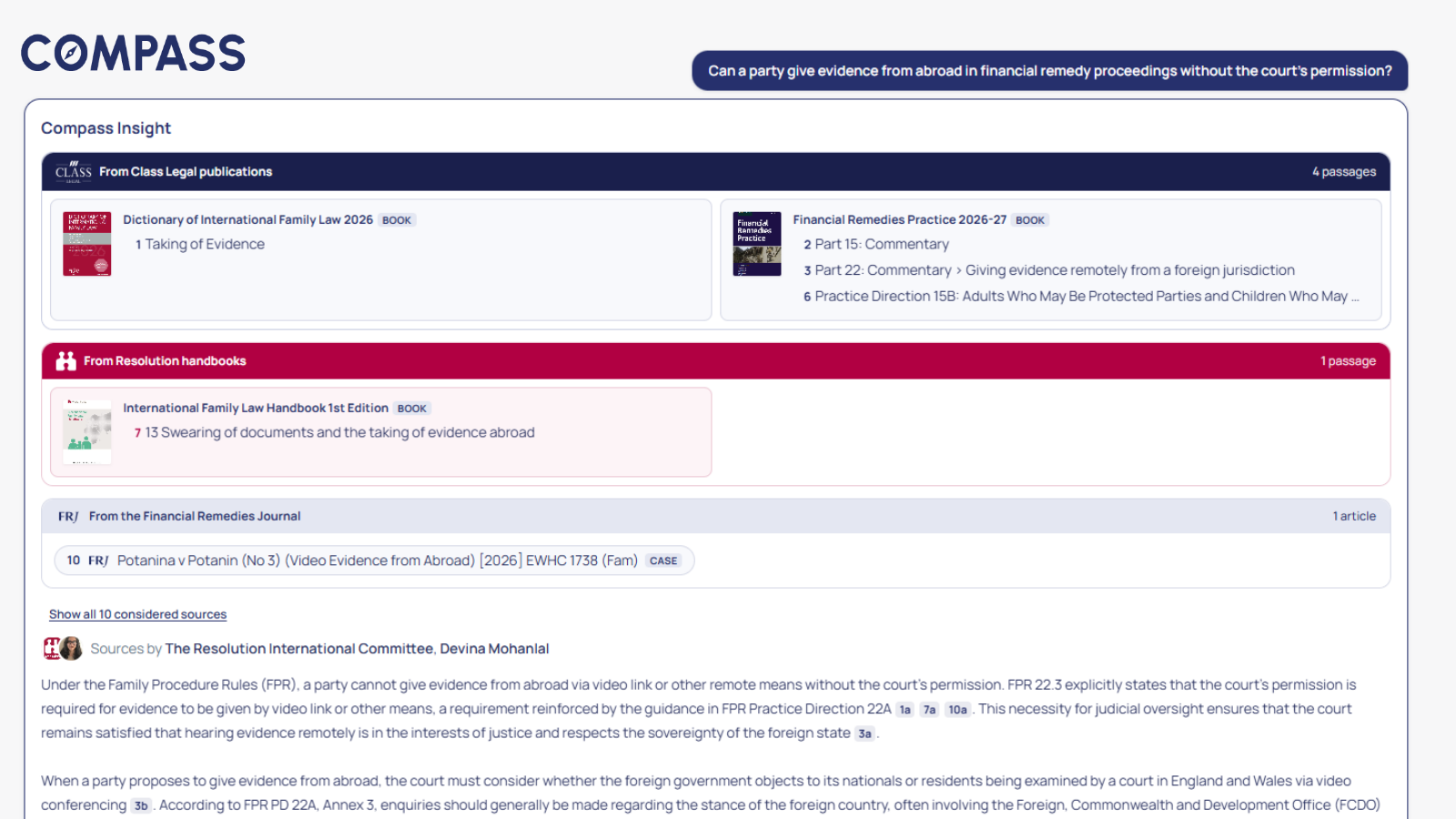
Class Legal partners with Resolution to expand trusted family law resources in Compass